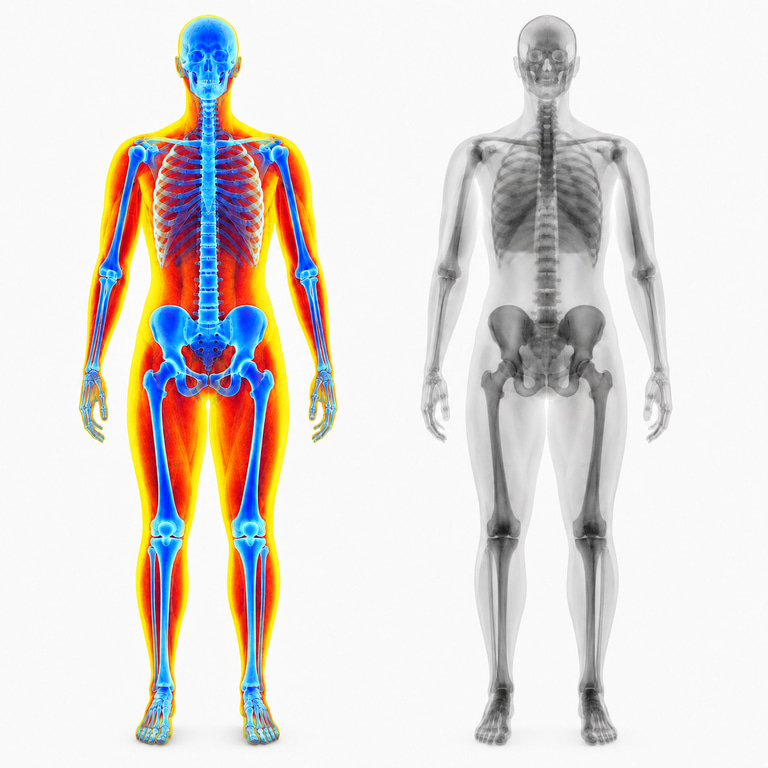

DEXA body composition – analysis of fat, muscle mass and fat distribution
DEXA is one of the most precise methods for mapping body composition and provides detailed measurements of fat mass, muscle mass and how fat is distributed in the body. The examination shows not only how much body fat you have, but also where it is located, including the difference between subcutaneous fat and visceral fat around the internal organs.
The method is considered the “gold standard” in body composition analysis and is used in both medicine and sports to assess metabolic health, physical capacity and changes over time.
The examination is currently only carried out at Unilab's clinics at Sophiahemmet and Hötorget in Stockholm.
What does the analysis show?
The result provides a detailed review of your body composition. You will receive information about your total fat percentage and how fat is distributed in the body. Fat distribution is particularly important because a high percentage of abdominal fat is linked to an increased risk of cardiovascular disease and metabolic conditions. The analysis also includes measurement of visceral fat, that is, fat around the internal organs. This is reported as area, volume and mass and is one of the most clinically relevant markers of metabolic risk.
Overview:
- Total body weight (kg)
- BMI – Body Mass Index (kg/m²)
- RMR – Rest Metabolic Rate (kcal/day). Basal metabolic rate is an estimate of how many calories you burn at rest and corresponds to the energy required to maintain the body's basic functions, such as body temperature, heart rate and breathing.
Fat mass and fat distribution:
- Total body fat (%)
- Fat distribution
- Fat mass ratios
- Trunk fat mass
- Leg fat mass
- Trunk/leg ratio (%)
- Android/gynoid ratio – describes how body fat is distributed between the abdomen and hips/thighs. A high ratio is linked to an increased risk of cardiovascular disease, diabetes and metabolic syndrome.
Visceral adipose tissue:
- Volume
- Mass
- Area
Subcutaneous adipose tissue:
- Volume
- Mass
- Area
Muscle mass:
- RSMI – relative skeletal muscle index (kg/m²), which reflects muscle mass in the arms and legs
- Lean mass – shows the body's fat-free tissue and can indicate imbalance between the sides of the body in the event of, for example, injuries or one-sided load
The following values may appear in the report but are not always included and should not be considered equivalent to a diagnostic bone density measurement:
Skeleton:
- Bone mineral content (kg) – total amount of mineral in the skeleton
- BMC – Bone Mineral Content (g), local mineral amount
- BMD – Bone Mineral Density (g/cm²), bone density
- Densitometry
- T-score
- Z-score
How are the results interpreted?
Unlike BMI, which is only based on weight and height, DEXA provides a detailed and medically relevant picture of the body's actual composition. The combination of fat distribution, visceral fat and muscle mass provides a more complete understanding of your health.
The results are presented both visually and in numbers, making it possible to follow changes over time and identify patterns that are not visible on the scale.
How a DEXA measurement works
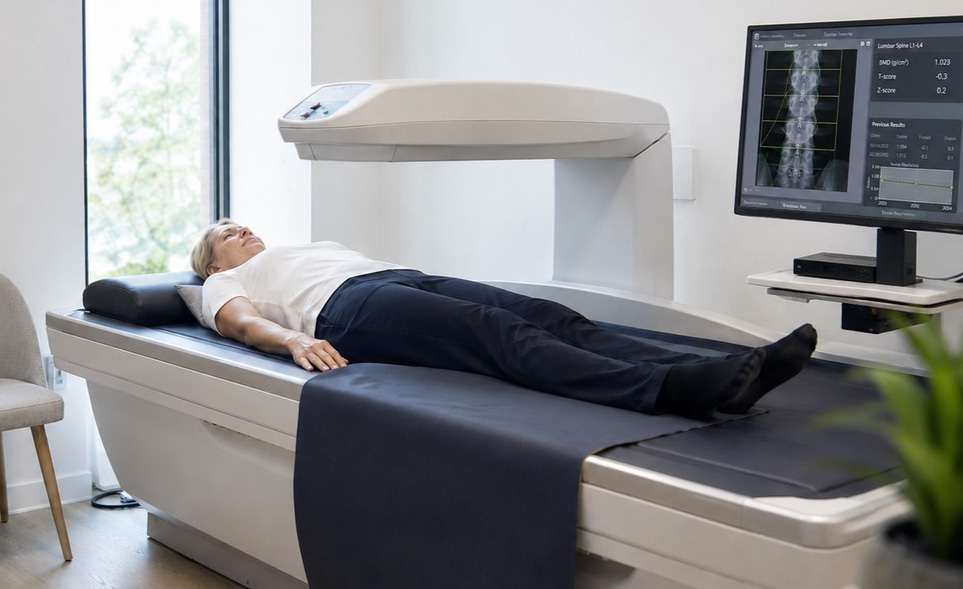
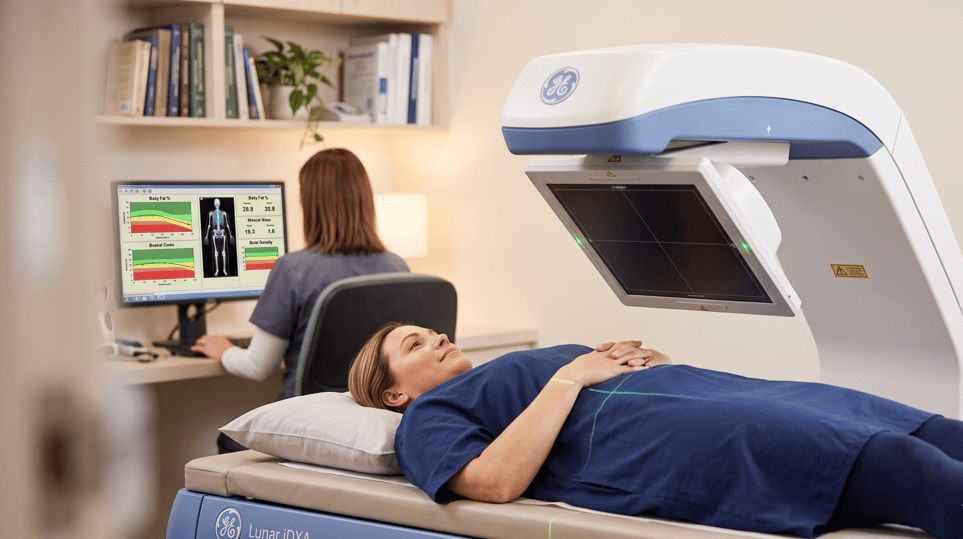
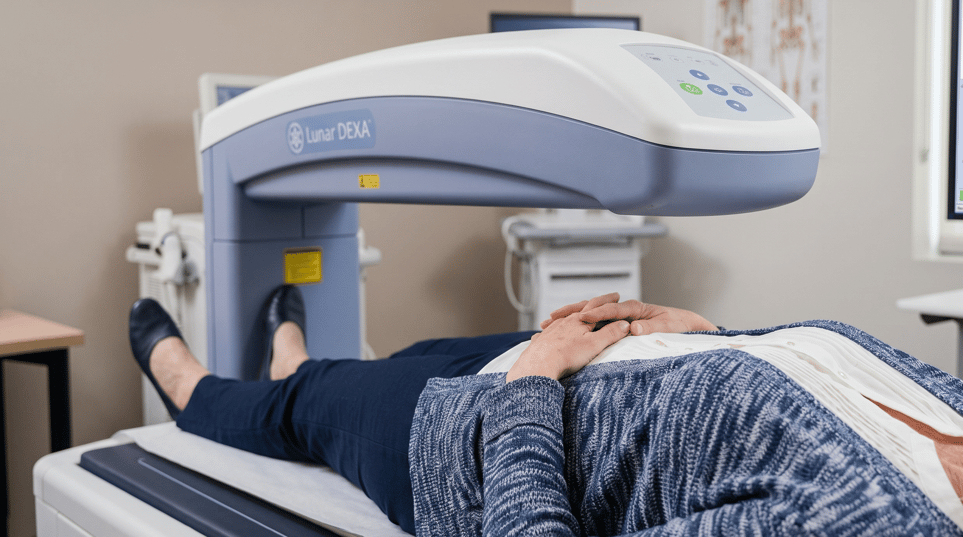
During the examination, you lie comfortably on a table while a low-dose X-ray scans the body. By using two different energy levels, the technology can distinguish fat tissue, muscle mass and bone with very high precision. The examination is completely painless and takes about 10–20 minutes. The radiation dose is very low and approximately corresponds to the natural background radiation you are exposed to during a day.
Preparation for the examination
You do not need to fast or make any advanced preparations. However, to get the most comparable results possible over time, it is recommended that you avoid large meals and intense exercise on the same day. Please remove any jewelry and clothing with metal details before the examination.
After the examination
Your examination will be reviewed by a specialist in radiology. You will receive a clear written medical report with a review of your body composition, including fat distribution, visceral fat and muscle mass. The results can be used as a basis for further medical assessment or follow-up over time.
Why do a DEXA body composition analysis?
Many health risks are linked to how fat is distributed in the body rather than to body weight itself. With DEXA, you get an accurate and personalized picture of your body composition – which makes it possible to discover hidden risk factors and make more informed decisions about your health.
Important information!
The examination concerns body composition analysis and does not include diagnostics of osteopenia or osteoporosis. If you want to examine your bone health, a separate DEXA bone density measurement is required, for example in the hip and lumbar spine.
DEXA uses a very low dose of ionizing X-ray radiation. Although the radiation dose is low, the examination involves a minor radiation exposure. The examination is not normally carried out during pregnancy. Always inform the clinic if you are pregnant or think you may be pregnant. We normally do not recommend that a new DEXA body composition examination be carried out within three months of a previous examination. Too frequent measurements can provide limited information and make it difficult to distinguish a real change from normal measurement variation. If medically recommended, a different interval may be appropriate.
The examination can currently only be carried out at Unilabs at Sophiahemmet and Hötorget in Stockholm, the current waiting time from order to examination is currently 3-4 weeks.