Kidney tests to check kidney function
The "Njurkollen" (Kidney Check) health screening is a comprehensive blood-based test for those who want more information about kidney function and the body's electrolyte balance. The kidneys filter the blood, remove waste products, and help regulate fluids, salts, and minerals in the body, among other things. Njurkollen includes 12 blood analyses covering several key kidney tests and related markers. Analyses include creatinine and Cystatin C, along with eGFR calculations based on each marker. Additionally, the panel includes urea, urate, sodium, potassium, chloride, calcium, and phosphate.
Impaired kidney function can develop gradually and often presents few or no clear symptoms in the early stages. By checking kidney markers via blood tests, you can gain information about the kidneys' filtration capacity and detect abnormalities that may require follow-up.
Physician's report included
A written physician's report is included with Njurkollen. Once all test results have been received, they are reviewed by a licensed physician who makes an overall medical assessment of your kidney markers and other analyses. The report helps you understand what the results mean and whether there are any abnormalities that may need re-testing or further investigation within the healthcare system.
Which kidney tests are included in Njurkollen?
Kidney function cannot be described by a single blood value.
The Kidney Check therefore combines several analyses that provide information on the kidneys' filtration capacity, electrolyte balance, and substances affected by kidney function.- Cystatin C – a marker used to estimate the kidneys' filtration capacity.
- eGFR Cystatin C – an estimate of the kidneys' filtration capacity based on Cystatin C.
- Potassium – an important electrolyte regulated by the kidneys, among other things.
- Chloride – an electrolyte that contributes to the body's fluid and acid-base balance.
- Creatinine – an established marker used to assess kidney function.
- Sodium – a key electrolyte for the body's fluid and salt balance.
- Urate – uric acid, which is largely excreted by the kidneys.
- Urea – a waste product of protein metabolism that is excreted by the kidneys.
- Phosphate – a mineral whose balance is partly regulated by the kidneys.
- Calcium – a mineral affected by, among other things, the kidneys' regulation of mineral balance.
Why are both creatinine and Cystatin C included?
A key strength of Njurkollen is that both creatinine and Cystatin C are analyzed, and eGFR is calculated based on each marker. Both creatinine and Cystatin C are used to estimate the kidneys' filtration capacity, yet they are influenced by different factors. Creatinine is produced in the muscles and is affected by factors such as muscle mass, physical activity, diet, and creatine supplements. Cystatin C is significantly less affected by muscle mass. By analyzing both markers, you therefore obtain a broader basis for assessing kidney function than by checking a single kidney value alone.
What does eGFR indicate?
eGFR stands for estimated glomerular filtration rate and is a calculated measure of how effectively the kidneys filter the blood. Generally, a lower eGFR indicates a lower estimated filtration capacity. However, a single low eGFR reading does not automatically mean that chronic kidney disease is present. Temporary fluctuations can occur due to factors such as dehydration, acute illness, or other impacts on kidney function. When assessing long-term impaired kidney function, the trend over time is therefore important.
Electrolytes and kidney function
The kidneys play a central role in regulating the body's fluid and electrolyte balance. They adjust the amount of water and various salts leaving the body, thereby helping to maintain blood concentrations within the correct ranges. The Kidney Check (Njurkollen) includes sodium, potassium, and chloride. These electrolytes are essential for, among other things, fluid balance, nervous system function, muscle activity, and the heart's electrical activity. Abnormal values can have many different causes and do not in themselves indicate the presence of kidney disease.
Calcium and phosphate
The kidneys are also involved in regulating calcium and phosphate levels, as well as the body's vitamin D metabolism. Consequently, prolonged or significant impairment of kidney function can affect mineral balance. While calcium and phosphate levels are not direct measures of the kidneys' filtration capacity, they provide complementary information alongside the other analyses included in the Kidney Check.
Why choose the Kidney Check?
The Kidney Check is suitable for those who want a comprehensive assessment of kidney function using several complementary blood tests, rather than analyzing just a single kidney marker. The combination of creatinine, Cystatin C, and eGFR provides information on filtration capacity, while electrolytes and other related markers offer a broader picture. Kidney tests can be particularly relevant for individuals with risk factors for kidney impairment—such as diabetes, high blood pressure, cardiovascular disease, a history of abnormal kidney values, known kidney disease, or a family history of kidney disease.
Testing may also be relevant during treatment with medications that can affect kidney function, or for individuals wishing to monitor their kidney markers over time.Impaired kidney function often presents few symptoms initially
Impaired kidney function can develop slowly and without clear symptoms. It is therefore possible to have reduced filtration capacity without noticing any distinct problems. Blood tests measuring creatinine, Cystatin C, and eGFR can provide important information about kidney function. In cases of more pronounced impairment, symptoms such as fatigue, nausea, loss of appetite, itching, swelling, and changes in urine output may occur. These symptoms are non-specific and can have many other causes.
Can Njurkollen detect signs of impaired kidney function?
Njurkollen can reveal abnormalities consistent with impaired kidney function, such as a low eGFR or altered levels of creatinine and Cystatin C. The results can therefore provide important information regarding the kidneys' filtration capacity and whether further medical assessment might be warranted. However, a blood test alone cannot determine the cause of impaired kidney function or diagnose all forms of kidney disease. If clear or persistent abnormalities are found, further medical investigation within the healthcare system may be necessary.
Where are the kidneys located?
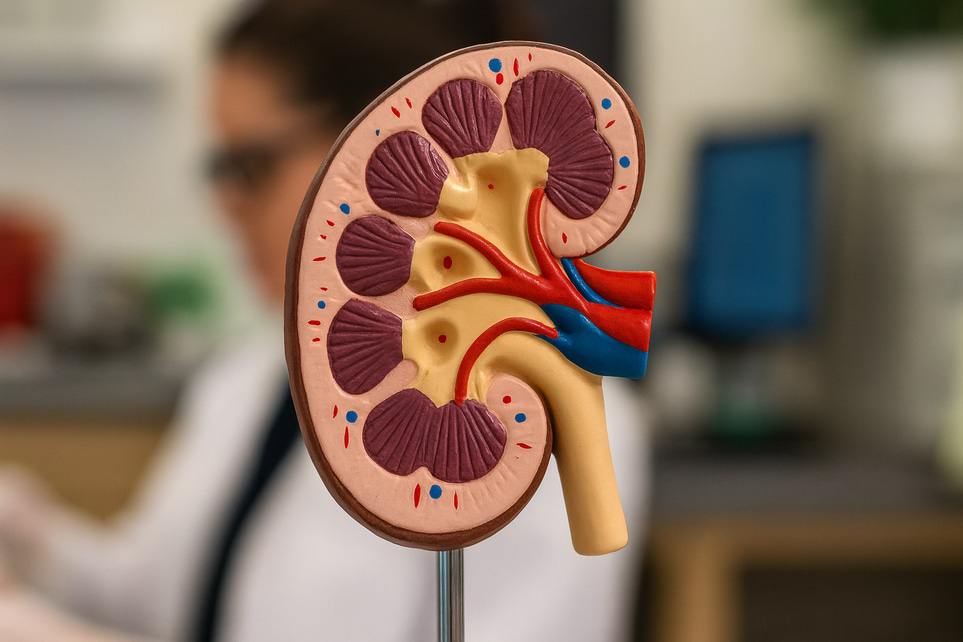
The kidneys are two bean-shaped organs situated deep in the upper abdomen, on either side of the spine and behind the peritoneum. The right kidney is usually positioned slightly lower than the left due to the location of the liver. The kidneys' primary functions are to filter the blood and regulate the body's fluid, electrolyte, and acid-base balance. They also play a role in processes such as blood pressure regulation, red blood cell production, and vitamin D activation.
Can kidney problems cause back pain?
Certain conditions affecting the kidneys or urinary tract—such as kidney stones or a kidney infection—can cause pain in the side of the back or the flank. Conversely, impaired filtration capacity and chronic kidney disease often cause no pain at all, especially in the early stages. "Njurkollen" (Kidney Check) is a blood-based test of kidney function; it is not designed to diagnose the cause of acute back or flank pain. If you experience severe or new-onset pain, fever, blood in your urine, or a marked deterioration in your general condition, you should seek medical attention for an assessment.
What happens if my kidney test results are abnormal?
Once all the analyses in the Kidney Check are complete, the results are reviewed by a licensed physician. The assessment is made on an individual basis, taking the overall picture into account—including the combination of test results, your medical history, any previous test values, and your clinical presentation. Therefore, a single abnormal kidney test result does not necessarily indicate the presence of kidney disease. If any of the analyses show abnormal results, you will be informed about what this means for your specific case and whether repeat testing, follow-up, or further medical assessment may be appropriate.
Check your kidney markers with a blood test
The Kidney Check includes 12 blood analyses for a comprehensive assessment of kidney function, filtration capacity, and electrolyte balance. By combining creatinine, Cystatin C, and eGFR with several additional kidney tests, you gain a broader basis for assessment than by analyzing a single kidney marker alone.