Skip to content

MRI Full Body

19 995 kr

MRI Full Body

Magnetic resonance imaging

Information

Medical comment included

With us, you will always receive a doctor’s opinion from a licensed physician when you order a medical check-up that includes a medical opinion. The doctor’s opinion includes an overall assessment of your results from laboratory analysis. The opinion is individual and may vary depending on the specific tests your medical check-up includes.

What can I expect in the medical report?

The medical opinion will summarize the results of your test results to give you an assessment of your health including any abnormalities outside the reference ranges. In case of abnormalities or need, your doctor may also contact you for a free conversation to explain and talk about your results. Remember that a health check always includes specific test results based on your health and your personal circumstances. Values outside the reference range should therefore always be discussed with a doctor before any decisions regarding possible treatment are made.

What does the doctor look at during a health check?

When assessing a blood test or health check, your doctor will look at several different parameters to evaluate your health and identify any abnormalities. Below are some common aspects your doctor may examine:

Blood counts: Your doctor will check red, white and platelet counts to identify any signs of anaemia, infection or bleeding.

Nutrients and biochemical markers: Includes, for example, analysis and monitoring of blood sugar (glucose) levels, electrolyte levels (e.g. sodium, potassium), liver function tests (e.g. liver enzymes), kidney function tests (e.g. creatinine, urea) and lipid profile (e.g. cholesterol, triglycerides). The results of the tests give your doctor a better idea of your organ function, blood sugar level, cholesterol conditions and other important health aspects.

Inflammatory markers: Your doctor may measure health markers such as C-reactive protein (CRP) or red blood cell decrease rate (SR) to evaluate inflammatory conditions or confirm an active infection.

Hormone levels: Your doctor may monitor your hormone levels to assess hormonal imbalances or diseases, such as thyroid hormones (TSH, T3, T4), sex hormones or other specific hormones such as testosterone levels.

Specific tests: Depending on your goal of your health check or medical history, your doctor may look into specific tests to investigate conditions or diseases, such as diabetes, vitamin deficiency or autoimmune diseases.

In conclusion, the doctor weighs all test results based on the health check to assess your overall health, detect any abnormalities and identify possible underlying medical conditions.

What happens if I have abnormal test results?

If your blood count is abnormal, this will be addressed in your personal medical opinion. Depending on the nature and extent of the abnormality, your doctor may also contact you directly through the test result service for further guidance. Various measures and advice will be provided based on the specific abnormalities observed along with your medical history.

Call included

We always offer a phone consultation with a licensed physician before a referral for an MRI or ultrasound is issued. This allows us to ask the right questions and ensure that you receive the most appropriate and accurate examination for your needs. After the examination, you will receive both the radiologist’s report and a medical opinion, and we remain available to support you throughout the entire process. Follow-up consultations can be booked if desired. Once you have activated the referral, one of our licensed physicians will call you.


Any questions? Call us for advice at 08–14 24 49.

19 995 kr
  • Magnetic camera examination of the full body
  • Recommended for those who are healthy for screening purposes
  • Detailed examination with magnetic camera
  • MRI full body, referral sent directly
Read more

Related Products


9 495 kr

Add-ons

Doctors statement

Doctors statement

Digital written medical statement

Lågt pris
Lowest price on the market
Ingen strålning
No radiation
Ingen strålning
Referral within 1 business day

MRI Full Body – Preventive full-body scanning for everyone

Order a referral for a full-body scan for preventive purposes. With MRI Full Body, you get a comprehensive picture of the body to detect any diseases and abnormal findings at an early stage.

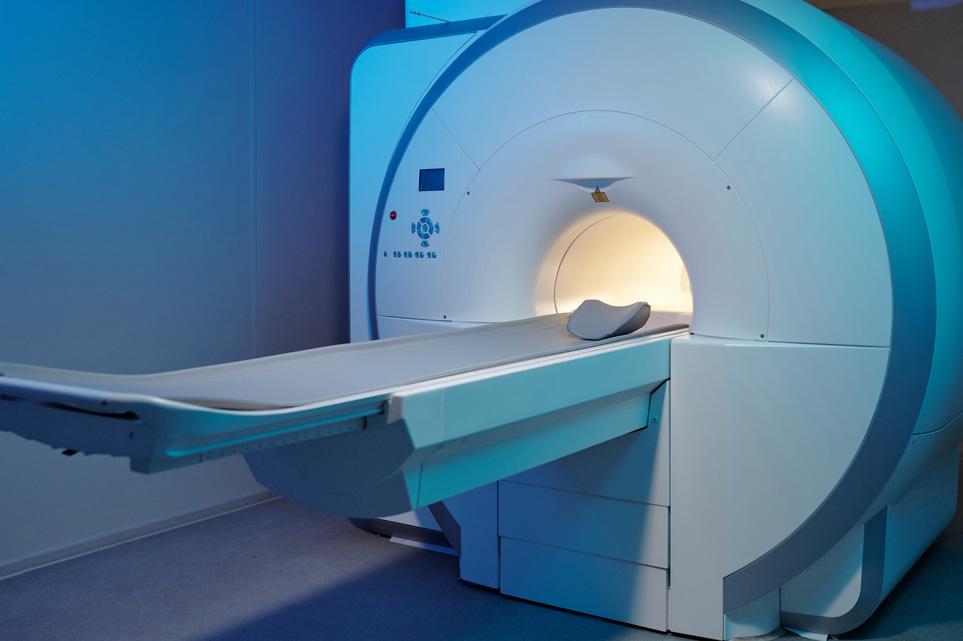
The examination is an advanced and completely radiation-free magnetic resonance imaging examination that scans your body all the way from the brain down to the pelvis and takes approximately 50 minutes to complete.

We recommend MRI Full Body to those of you who are healthy but who want to gain a good insight into your health by ruling out serious diseases – before symptoms occur.

The magnetic resonance imaging examination is painless, the referral is sent immediately and you receive a clear statement based on the results.

Provided that you experience clear symptoms in specific body parts or have other suspicions of abnormalities, an MRI examination dedicated to the specific area(s) is recommended.

When is a Full Body MRI recommended?

  • Want to detect serious diseases at an early stage, examples of these diseases are cancer, stroke, tumors or inflammatory conditions.
  • Have hereditary risk factors in the family that may be difficult to detect through blood tests alone.
  • Have had previous diseases and want to follow up with a detailed image of internal organs and structures.
  • Want a complement to blood tests - many diseases are not visible in the blood but can be detected using an MRI scan.
  • Want a comprehensive, radiation-free and non-invasive method that provides the opportunity to review the health status of the entire body.

This is included in a Full Body MRI

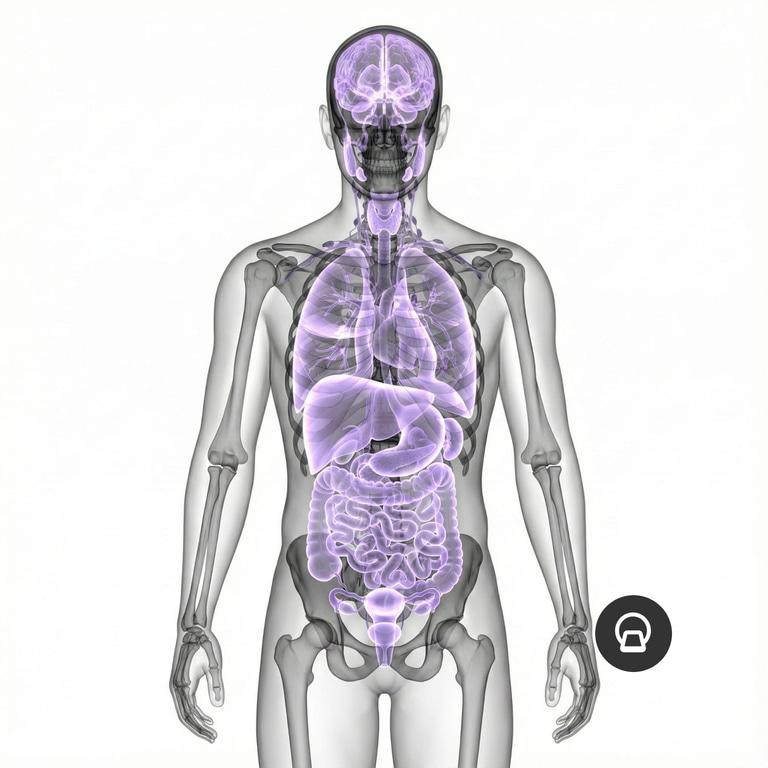
The examination takes approximately 50–60 minutes and includes 9 high-resolution sequences that provide a broad but detailed overview of the entire body. Here are the different areas that are analyzed:

Brain and blood vessels

  • Stroke (infarction/bleeding), tumors, dementia changes, MS, vascular malformations and aneurysms
  • Any changes in the eye sockets and sinuses

Throat

  • Analysis of the thyroid gland, lymph nodes and salivary glands
  • Indication of tumors and anatomical abnormalities

Chest and lungs

  • Analysis of lung tissue, pleura, lymph nodes and aorta
  • Abnormalities may indicate signs of inflammation, tumors and aneurysms

Abdomen and internal organs

  • Analysis of liver, gallbladder, spleen, pancreas, adrenal glands and kidneys
  • May indicate signs of tumors, cysts, fatty liver, bile duct obstruction and inflammation

Pelvis

  • Analysis of the prostate (men), uterus and ovaries (women), bladder, intestinal pouches
  • May indicate the presence of endometriosis, fibroids, cysts and tumors

Skeleton and spine

  • Analysis of the cervical, thoracic and lumbar spine, pelvis and hips
  • Abnormalities may indicate herniated discs, spinal stenosis, osteoarthritis, tumors and inflammatory changes

How the examination is done

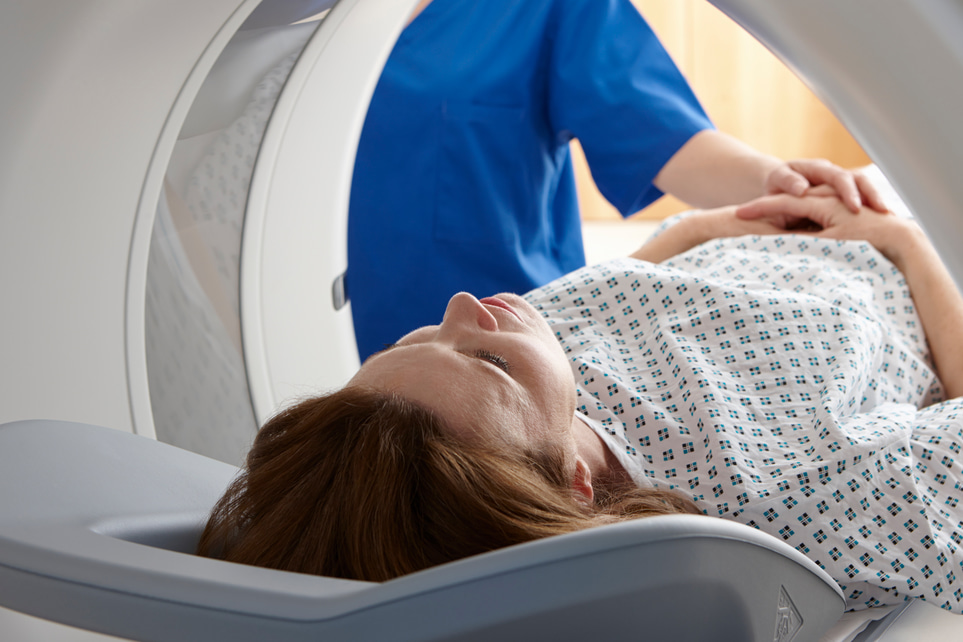
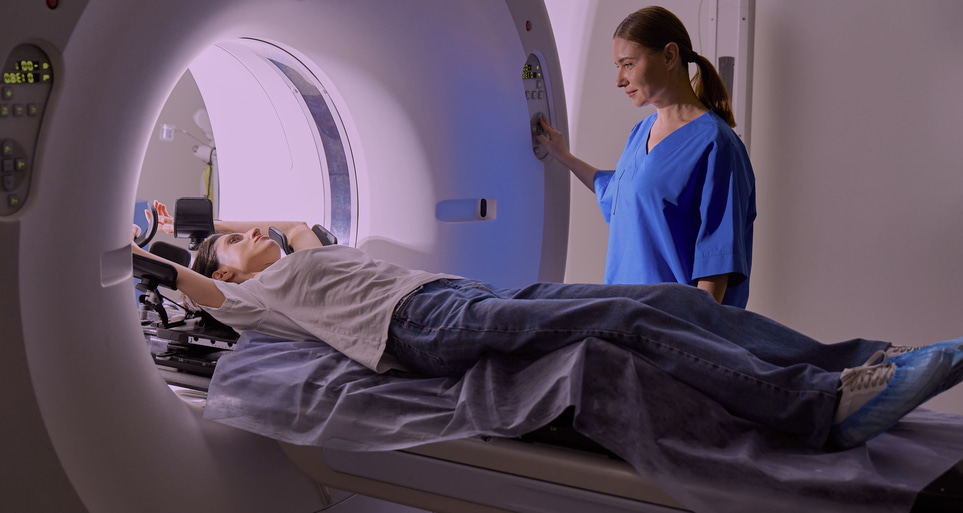
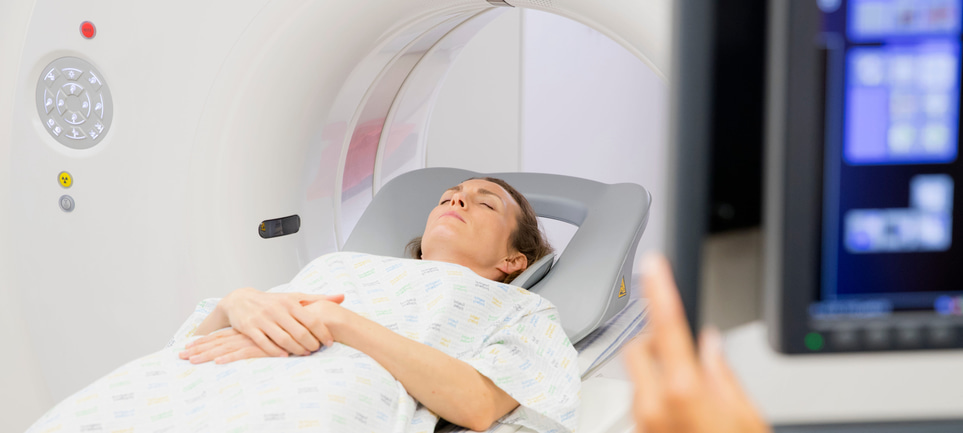
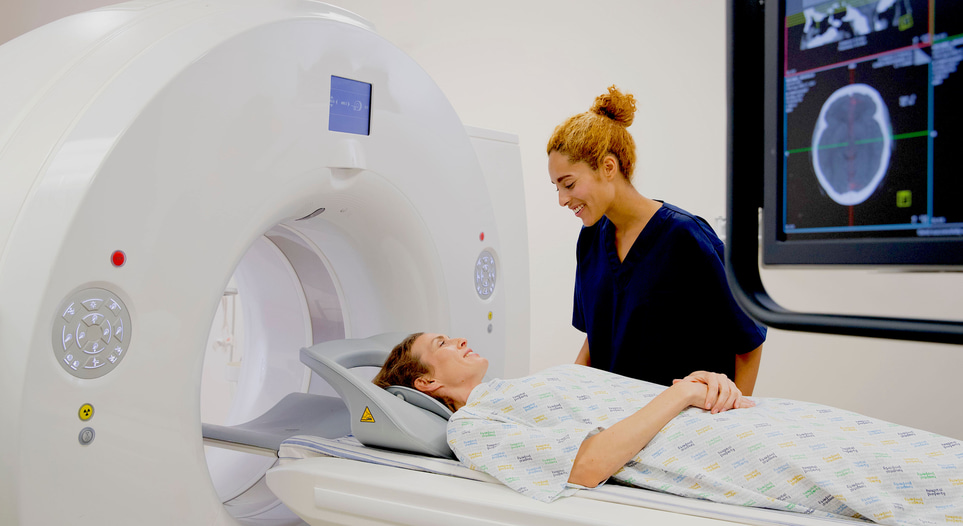
The examination with an MRI camera is done by having you lie comfortably on your back for approximately 50–60 minutes while the camera creates high-resolution images with millimeter precision.

The examination itself is completely painless – all you need to do is lie still throughout the examination.

The examination is completely radiation-free and you will be given hearing protection or music in headphones to listen to because the machine is quite noisy.

During the X-ray, you will be cared for by experienced X-ray nurses who will be in contact with you throughout the examination.

Important to know:

Do you have a pacemaker, insulin pump or other electronic equipment in your body? Inform us before the examination by answering the questions you receive in the health declaration when you activate the referral in our test response service.

Metal implants such as hip prostheses are usually not an obstacle.

After the examination

  • A personal health report with analysis from a radiologist and specialist doctor
  • A digital login for personal access to your X-rays
  • If necessary and alarming findings occur, you will also receive a quick referral within the healthcare system to the treating unit

For those who want to stay one step ahead

MRI Full Body is recommended for those who want to have a holistic view of your health and detect potential diseases in time.

The examination should be carried out for preventive purposes to identify changes in the body before symptoms occur - this is often crucial for the prognosis.

It is a completely risk-free examination without harmful radiation that is carried out using modern MRI technology.

Book and activate your referral immediately and be called within 7–10 working days.
The abdomen is the body's internal hub, where several of our most important organs are gathered in a protected but flexible space. These organs include digestive organs such as the stomach, small intestine, large intestine, liver, gallbladder and pancreas. These organs are responsible for the breakdown and absorption of nutrients, as well as detoxification and metabolism.

The kidneys and ureters are also located in the abdomen, which are responsible for purifying the blood and regulating both fluid and salt balance. The spleen is part of the immune system and breaks down old blood cells. All of these organs are surrounded by a protective peritoneum and are stored in different layers of muscle, fat and connective tissue that make up the abdominal wall. The abdomen is a very rich area of ​​both blood vessels and nerves, which makes it sensitive to both illness and injury.

ABD
Abdomen
The abdomen is the central area between the rib cage and the pelvis that houses several of the body's most important organs. This is where digestion, detoxification, and the immune system take place, among other things.
Read more
GLU
Adrenal glands
The adrenal glands are small hormone-producing glands on top of the kidneys that regulate stress response, blood pressure, salt and fluid balance, and metabolism. They produce important hormones such as cortisol, aldosterone, adrenaline, and noradrenaline.
Read more
BLD
Bile Ducts
The bile ducts are a vital part of the body’s digestive system and are responsible for transporting bile from the liver and gallbladder to the small intestine. They play a central role in breaking down fats from the food we eat and in removing waste products that the body no longer needs.
Read more
GBL
Gallbladder
The gallbladder is a small organ that stores and releases bile. It plays a central role in digestion and is often associated with conditions such as gallstones and inflammation.
Read more
KID
Kidney
The body has two kidneys, which are bean-shaped organs that filter the blood, produce urine, and play a central role in the body's fluid balance and blood pressure.
Read more
LVR
Liver
The liver is one of the body’s most vital organs and plays a central role in metabolism, detoxification, and the production of important proteins. It has a unique ability to regenerate and is essential for the body’s balance and overall health.
Read more
PAN
Pancreas
The pancreas, also called the pancreas, is a vital organ that plays a central role in digestion and blood sugar regulation.
Read more
LIE
Spleen
The spleen is an important organ in the lymphatic system that filters the blood, breaks down old blood cells, and strengthens the immune system. It also acts as a blood reserve and plays a central role in infections and bleeding.
Read more

The back is one of the body's most central structures, both in terms of stability and movement. The back consists primarily of the spinal column (vertebral column), which is made up of several vertebrae divided into the cervical spine, thoracic spine, lumbar spine, sacrum and coccyx. The vertebrae protect the spinal cord – part of the central nervous system – and act as pillars for posture. Between all vertebrae there are discs, which act as shock absorbers and enable flexibility.

Muscles, tendons and ligaments also have a place in the back. Deep back muscles stabilize the spine, while the extrinsic muscles contribute to movement throughout the upper body. Nerves also pass through the spine, whose nerve roots transmit signals between the brain and the rest of the body. In summary, the back plays a crucial role in posture, movement, strength and nerve function.

CSP
Cervical spine
The neck, also called the cervical spine, is the top part of the spine and is crucial for head mobility and protection of the spinal cord.
Read more
LSP
Lumbar spine
The lower part of the spine, the lumbar spine, is an important structure for the body's stability and movement. The lumbar spine is particularly vulnerable to stress injuries and pain.
Read more
SCB
Shoulder Blade
The shoulder blade is a bony structure located in the upper back that plays a crucial role in shoulder mobility and stability. It connects the upper arm to the ribcage and serves as an attachment point for several important muscles.
Read more
TSP
Thoracic spine
The thoracic spine is the middle part of the spine, between the cervical spine and the lumbar spine, and plays a central role in the body's posture and movement.
Read more

The chest (thorax) is a protective place for the body's vital organs, such as the heart and lungs. The chest consists of the sternum, twelve pairs of ribs and the vertebrae of the thoracic spine, which together form a strong yet flexible skeleton. The skeleton serves as a strong protection against external influences and is at the same time an attachment point for muscles involved in breathing and upper body movements.

Inside the chest is the heart, which pumps blood to the entire body, and the lungs in which gas exchange occurs during breathing. The respiratory muscle diaphragm forms the bottom of the chest and plays a major role in both inhalation and exhalation. In addition to the organs, the chest also houses large blood vessels, nerves and lymphatic vessels. The breast tissue in women, including the nipples, is also part of the chest and has both hormonal and functional roles.

AOR
Aorta
The aorta is a large main artery that plays a central role in blood circulation by transporting oxygen-rich blood from the heart to the body’s various organs. Its function is absolutely crucial for the proper operation of vital organs and tissues.
Read more
HRT
Heart
The heart is the body's central pump, ensuring that blood circulates and supplies all organs with oxygen and nutrients. It is a vital organ within the circulatory system.
Read more
LNG
Lungs
The lungs are the body’s most important respiratory organs, responsible for absorbing oxygen from the air we breathe and expelling carbon dioxide. They are also vital for the body’s ability to produce energy and influence the entire metabolism.
Read more
RIB
Ribs
The twelve pairs of ribs together form the rib cage, which protects vital organs such as the heart and lungs. The movement of the ribs enables inhalation and exhalation, and they can be affected by various types of injuries and pain conditions.
Read more
THX
Thorax
The thorax is the body's protective structure for the heart and lungs, while also enabling breathing through the interaction of bones, joints and muscles.
Read more

The head is the body's home for several of our most advanced functions and sensory organs. The head houses the brain, which controls our entire nervous system and enables everything from consciousness, memory, thinking ability and emotions. The brain is protected by the skull bone, which also serves as the attachment point for the facial muscles.

Our sensory organs are also located here, such as the eyes for vision, the ears for hearing and balance, the nose for smell, and the mouth for taste and speech. The face consists of several bones and soft tissues that form the forehead, cheeks, nose and jaws. The oral cavity contains the teeth, tongue and salivary glands, which help with functions such as chewing and swallowing. The scalp protects the surface of the skull and the hair on the head functions as both temperature regulation and protection against the sun and cold.

BRN
Brain
The brain is the body's command center. It controls thoughts, emotions, movements, bodily functions and memory, and processes all information from our senses.
Read more
ORB
Orbit
The orbit is the bony cavity in the skull where the eye and its associated structures are located. It plays a crucial role in the protection and movement of the eye.
Read more
SLA
Sella turcica
The sella, or sella turcica, is a saddle-shaped structure at the base of the skull that houses the pituitary gland – a central gland of the endocrine system. It plays an important role in protecting the hormone center of the brain.
Read more
SNS
Sinuses
Sinuses are air-filled cavities in the bones of the skull that are connected to the nasal cavity. They play an important role in breathing, moisture regulation, sound resonance, and pressure equalization in the head.
Read more

Inside the body, systems are constantly working together to keep us alive and in balance. Hormones regulate everything from metabolism to mood, while the nervous system sends signals between the brain and different parts of the body. The blood transports oxygen, nutrients, and hormones through the circulatory system, and the lymphatic system removes waste products and strengthens the immune defenses.

The immune system identifies and fights infections, while the endocrine system fine-tunes the body’s functions through glands such as the thyroid, adrenal glands, and pituitary gland. These systems interact in a complex yet well-coordinated whole – the body’s inner machinery that allows us to function as we should.

LYM
Lymphatic System
The lymphatic system forms an important part of the body’s immune and circulatory systems. It consists of lymph vessels, lymph nodes, and lymphoid organs that together transport fluids, nutrients, and immune cells throughout the body. The lymphatic system detects and fights infections and helps the body maintain fluid balance.
Read more

The pelvis is the lower center of the body and consists of several fused bones that connect the spine to the legs. It is both a supporting structure and a protective framework for the urinary tract, genitals and parts of the intestine. The hip joints, which enable walking and movement, and the sacroiliac joints that connect the spine to the pelvis are also located in the pelvis.

When it comes to the internal genital organs that are located in the pelvis, men have the prostate and vas deferens. The internal genital organs of women consist of the uterus, ovaries and fallopian tubes. The external genital organs – such as the clitoris, labia, penis, scrotum and testicles – also belong to this area. Our genitals are rich in nerves, blood vessels and glands, which are important for reproduction, hormone production and urination. It is an area where anatomy, function and sexuality meet.

UBS
Bladder
The bladder is an elastic organ whose function is to temporarily store urine before it is expelled from the body. It is a vital part of the urinary system and plays an essential role in the body’s purification process and fluid balance.
Read more
HIP
Hip
The hip is a stable ball-and-socket joint that supports the body's weight and enables walking, running, and other leg movements. It is central to the body's balance and mobility.
Read more
OVR
Ovaries
The ovaries are a vital part of the female reproductive system and control the production of eggs as well as sex hormones such as estrogen and progesterone. Their function plays a crucial role in maintaining a normal menstrual cycle, fertility, and hormonal balance.
Read more
PLV
Pelvis
The pelvis is a central structure that supports the spine, protects internal organs and plays an important role in gait, posture and pelvic floor function.
Read more
PRT
Prostate
The prostate is a small gland in the male body that plays an important role in reproduction. It can be affected by various conditions, especially in older age.
Read more
UTR
Uterus
The uterus, also known as the womb, is a vital part of the female reproductive organs. It is a muscular organ that plays a crucial role in menstruation, pregnancy, and childbirth.
Read more

The neck and throat are an important transition zone between the head and torso, where several critical structures are gathered within a narrow space. The cervical spine, which consists of the seven uppermost vertebrae in the spine, provides support for the head while also allowing for both twisting and bending. The trachea, which carries air to the lungs, and the esophagus, which transports food to the stomach, pass here.

The vocal cords are located in the larynx, which is central to speech and voice formation. The neck region also contains important blood vessels such as the carotid artery, as well as nerves that control the face and arms. Lymph nodes, thyroid gland and salivary glands are also located here, making the area anatomically and clinically complex. The neck is also sensitive to infections, stiffness, swelling and circulatory disorders.

NEK
Throat
The neck is an important body part that connects the head to the torso and contains several vital structures such as the airways, esophagus, blood vessels and nerves.
Read more
TYH
Thyroid gland
The thyroid is a small gland in the front of the neck that produces hormones that control metabolism, energy, and growth. Common diseases include hypothyroidism, hyperthyroidism, and autoimmune conditions.
Read more

After your order, we will send a referral for your MRI scan. Before that, you will have a brief consultation with a referring physician who will review your medical history and symptoms. After the consultation, your referral will be forwarded to the radiology clinic.

Magnetic Resonance Imaging (MRI) is a safe method for obtaining detailed images of the body's organs, tissues, and joints using a strong magnetic field and radio waves – completely without radiation.

Things to consider before the examination:

  • Clothing and items: You will be asked to remove clothing with metal, jewelry, watches, hearing aids, and other items that may be affected by the magnetic field.
  • Metal in the body: Inform the medical staff if you have a pacemaker, implants, metal clips, artificial joints, or other metal objects in your body.
  • Pregnancy: Notify the staff if you are pregnant or suspect that you might be.
  • Contrast agent: In some cases, a contrast agent is used to enhance image quality. You will be informed about any preparations or possible side effects if applicable.

After your MRI scan is completed, the images are reviewed by a specialist in radiology. The radiologist interprets the images based on the clinical question stated in your referral and prepares a medical report for the referring physician.

The referring physician from our team will then review the report and provide you with a written medical assessment and guidance.

If the examination reveals any abnormalities or findings, we will ensure that you are either referred to an appropriate healthcare provider or receive advice on suitable follow-up – all of this is included in the price.

X-ray

Evidia Annedal Radiology

Arvid Wallgrens backe 4 A , Göteborg

Appointment
X-ray

Evidia Farsta Radiology

Karlandaplan 6, Farstagången 32 , Farsta

Appointment
X-ray

Evidia Järva Radiology

Rinkebysvängen 70, ingång D , Spånga

Appointment
X-ray

Evidia Jönköping Röntgen

Batterigatan 11 , Jönköping

Appointment
X-ray

Evidia Karlstad Radiology

Norra Infarten 79, Löfbergs Arena , Karlstad

Appointment

Evidia Malmö Entré Radiology

Fredsgatan 12 , Malmö

Appointment
X-ray

Evidia Mölndal GoCo Radiology

Entreprenörsstråket 6 , Göteborg

Appointment
X-ray

Evidia Nacka Radiology

Lasarettsvägen 6 , Nacka

Appointment
X-ray

Evidia Sabbatsberg Radiology

Olivecronas väg 1 , Stockholm

Appointment
X-ray

Evidia Skärholmen Radiology

Storholmsgatan 19 , Skärholmen

Appointment
X-ray

Evidia Sundsvall Radiology

Institutsvägen 2 , Sundsvall

Appointment
X-ray

Evidia Täby Radiology

Esplanaden 9 , Täby

Appointment
X-ray

Hyllie Radiology

Hyllie stationstorg 2B , Malmö

Appointment
X-ray

Radiology Elisabethsjukhuset

Geijersgatan 20 , Uppsala

Appointment
X-ray

Umeå Radiology

Renmarkstorget 12 , Umeå

Appointment

How does it work?

Order an MRI scan – four easy steps

Step 1

Order MRI

Select the MRI scan you wish to perform and add to your cart, for example lumbar spine, abdomen or full body. Complete your order and select a payment option, we always apply an open purchase on MRI for at least 30 days.

Step 2

Activate the referral

After payment, you’ll receive an email with instructions. Log in to enter your details and activate your referral. A physician will contact you to confirm your booking and discuss your preferences.

Step 3

Complete your MRI

You will be called via Kivra or mail within 7–10 working days, visit the clinic you have been called to at the appointed time. Contact the clinic directly for possible rescheduling if the time does not suit you. Read more

Step 4

Results and statement

You will receive feedback on your X-rays within 5–7 working days. However, in some cases it may take a few extra days before all results are ready and reviewed by specialist doctors. Read more

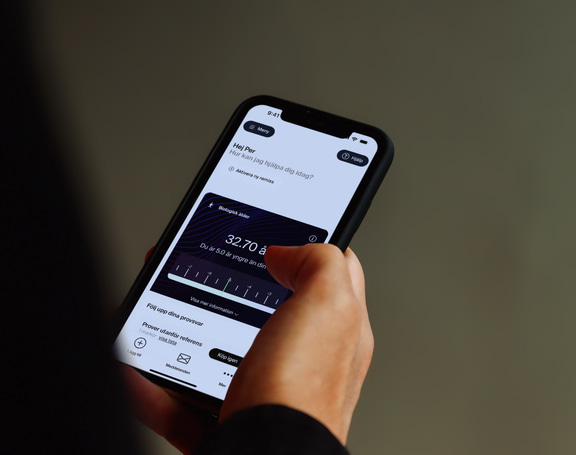
Your test answers in zample™

– A smarter tool for understanding your health

See all features

Select area

See the full list below

Other MRI examinations


MRI Full body Plus

MRI Full body Plus

MRI + blood tests

21 000 kr

MRI Full Body Pro

MRI Full Body Pro

MRI + blood tests + ECG

23 900 kr

Prostate Check – MRI & Stockholm3

Prostate Check – MRI & Stockholm3

MRI Prostate + Stockholm3

10 599 kr


MRCP

MRCP

MRI of the biliary tract and pancreas

7 695 kr

MRI Abdomen/MRCP

MRI Abdomen/MRCP

MRI of the abdomen

6 995 kr

9 495 kr

MRI Brain

MRI Brain

Magnetic resonance imaging

6 795 kr

5 299 kr

9 195 kr

9 195 kr

MRI Ears

MRI Ears

Magnetic resonance imaging

5 595 kr

13 995 kr

MRI Full Body

MRI Full Body

Magnetic resonance imaging

19 995 kr

MRI Full body Plus

MRI Full body Plus

MRI + blood tests

21 000 kr

MRI Full Body Pro

MRI Full Body Pro

MRI + blood tests + ECG

23 900 kr

MRI Kidneys

MRI Kidneys

MRI scan of the kidneys

6 195 kr

MRI Pancreas

MRI Pancreas

Magnetic resonance imaging

6 195 kr

MRI Pelvis

MRI Pelvis

MRI scan

6 495 kr

MRI Pituitary gland

MRI Pituitary gland

Magnetic resonance imaging

4 495 kr

MRI Prostate

MRI Prostate

Magnetic resonance imaging

7 295 kr

7 295 kr

MR Auditory pathway

MR Auditory pathway

MRI of the pore

4 095 kr

MR Liver

MR Liver

MRI examination of the liver

6 795 kr


MRI Ankle

MRI Ankle

Magnetic resonance imaging

4 495 kr

MRI Cervical spine

MRI Cervical spine

Magnetic resonance imaging

5 395 kr

MRI Chest

MRI Chest

Magnetic resonance imaging

6 795 kr

MRI Elbow

MRI Elbow

Magnetic resonance imaging

4 495 kr

MRI face

MRI face

Magnetic resonance imaging

5 795 kr

MRI Femur

MRI Femur

Magnetic resonance imaging

4 495 kr

MRI Foot

MRI Foot

Magnetic Resonance Imaging

5 195 kr

MRI Forearm

MRI Forearm

Magnetic Resonance Imaging

3 795 kr

13 995 kr

MRI Full Body

MRI Full Body

Magnetic resonance imaging

19 995 kr

MRI Full body Plus

MRI Full body Plus

MRI + blood tests

21 000 kr

MRI Full Body Pro

MRI Full Body Pro

MRI + blood tests + ECG

23 900 kr

MRI Hand

MRI Hand

Magnetic resonance imaging

4 195 kr

MRI Hip joint and pelvis

MRI Hip joint and pelvis

Magnetic resonance imaging

5 795 kr

MRI Knee

MRI Knee

Magnetic Resonance Imaging

4 295 kr

MRI Knee

MRI Knee

Magnetic Resonance Imaging

4 895 kr

MRI Lower Leg

MRI Lower Leg

Magnetic resonance imaging

4 495 kr

MRI Lumbar spine

MRI Lumbar spine

MRI of the lumbar spine

5 995 kr

MRI Orbita

MRI Orbita

Magnetic resonance imaging

5 395 kr

MRI Sacroiliac joints

MRI Sacroiliac joints

Magnetic Resonance Imaging

4 495 kr

MRI Shoulder

MRI Shoulder

Magnetic resonance imaging

4 495 kr

MRI Sinus

MRI Sinus

Magnetic Resonance Imaging

6 495 kr

MRI Skull base

MRI Skull base

Magnetic Resonance Imaging

4 495 kr

MRI Temporomandibular joints

MRI Temporomandibular joints

Magnetic resonance imaging

5 495 kr

MRI Thoracic spine

MRI Thoracic spine

Magnetic resonance imaging

4 995 kr

MRI throat

MRI throat

Magnetic resonance imaging of the throat

6 195 kr

MRI Upper arm

MRI Upper arm

Magnetic Resonance Imaging

4 495 kr

MRI Wrist

MRI Wrist

Magnetic resonance imaging

4 495 kr

MR Achilles tendon

MR Achilles tendon

Magnetic resonance imaging

4 195 kr

5 595 kr

With us you are always safe with our satisfied customer guarantee!

With us you are always safe with our satisfied customer guarantee!

We want to help people improve their health. That's why it's important that you feel safe with us. As a healthcare provider, safety is our top priority and we always strive to deliver the highest quality in our services. If for any reason you are not completely satisfied with your experience with us - do not hesitate to contact us. We listen and will do what we can to make you feel safe and satisfied. Our satisfied customer guarantee is an expression of our commitment to you and your health - where we want to take our responsibility when you use our services to access your health data and improve your health.

Related articles

Cart

The basket is empty.

Hos oss får du tillgång till Sveriges bredaste utbud av blodprov, hälsokontroller och MR – med läkare som alltid granskar dina provsvar.

Select tests


Sampling fee
Total
Sampling fee?

The sample collection fee is a fixed cost that refers to the visit to the clinic where you submit your sample. The fee is not affected by how many tests you have ordered, but varies depending on the order value:

Free sampling fee

For purchases over 1 000 SEK, the sampling fee is included.