
NIPT test - prenatal diagnosis
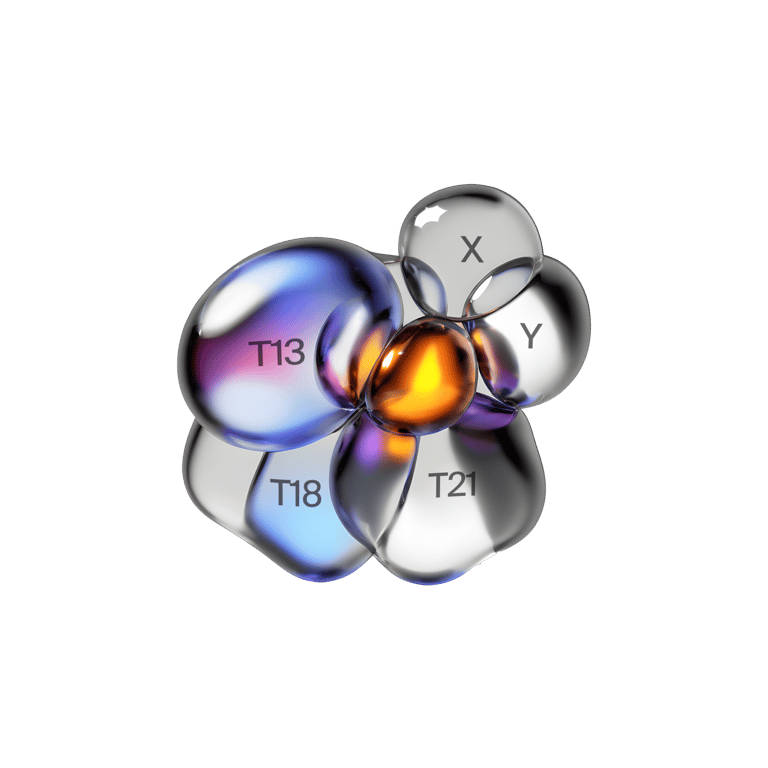
NIPT (Non-Invasive Prenatal Testing) is a blood test to early and reliably assess the likelihood of chromosomal abnormalities in the fetus. By analyzing cell-free DNA from the mother's blood, NIPT can detect common aneuploidies, such as trisomies 13, 18, and 21, as well as abnormalities in the sex chromosomes X and Y.
Book NIPT with us - Get a referral directly
You order the NIPT test directly via the website and within a few minutes your referral is ready to use. You can then take the blood sample at any clinic affiliated with Karolinska that offers drop-in times. You will receive the test results digitally within 7 to 10 business days from the time the sample arrives at the Karolinska University Laboratory.
How is the NIPT test performed?
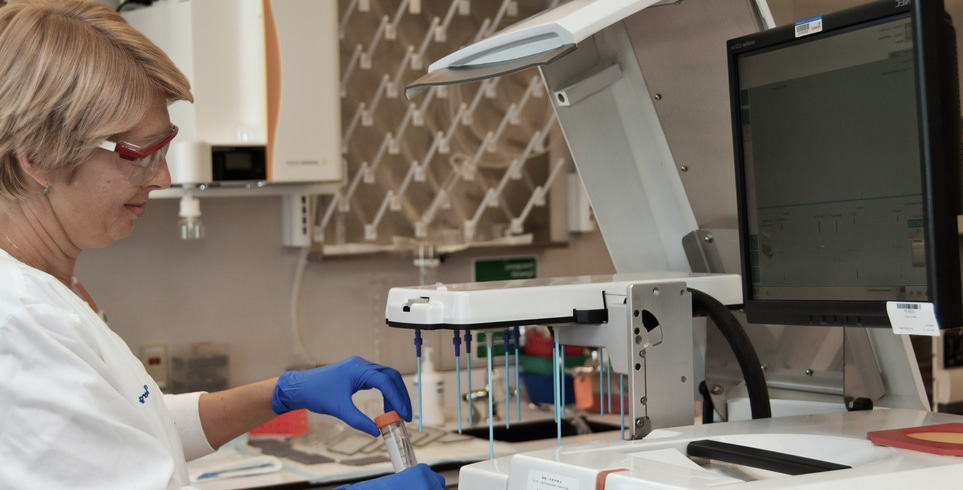
NIPT is a simple blood test performed by healthcare professionals by taking a venous sample from the fold of the arm. You may feel a little sore after the needle prick, but other side effects rarely occur. NIPT is very reliable when there are no abnormalities. Provided that the NIPT test indicates an abnormality, the result needs to be confirmed with follow-up tests, such as amniotic fluid or placental samples, to get a definitive answer.
What does the NIPT test show?
NIPT shows the likelihood of possible abnormalities in the chromosomes such as Down syndrome, Patau syndrome and Edwards syndrome. NIPT tests are recommended if aneuploidy in the fetus is suspected, which means abnormalities in the number of chromosomes. The primary focus of the test is to detect trisomy 21, which causes Down syndrome, the most common chromosomal abnormality in which the fetus has an extra copy of chromosome 21. A much more serious chromosomal abnormality is trisomy 18, in which the fetus has three copies of chromosome 18 instead of two. This can cause severe physical and cognitive disabilities, and many children do not survive their first year of life.
NIPT can also provide information about the fetus's sex chromosomes (X and Y) and can identify if there are any abnormalities in the number of sex chromosomes. At the same time, you will also find out the fetus's sex, but this is optional and you can choose to hide the test result so that it is not displayed in the test result service.
To summarize, the NIPT test includes the following specific analyses:- Trisomy 13 (Patau syndrome)
- Trisomy 18 (Edwards syndrome)
- Trisomy 21 (Down syndrome)
- Sex chromosomal abnormalities (X and Y)
According to instructions from Karolinska, test results are provided within 7-10 business days from the time the sample is submitted. Referral for sampling is issued on the same day as the order.
At what week should the NIPT test be performed?
NIPT can be performed at the earliest in pregnancy week 10+0. However, it is usually offered from week 12+0 onwards, when a first trimester anatomy scan can be performed according to recommendations from the Ultra-ARG (Ultrasound Diagnostics Working and Reference Group). This scan helps to ensure that the fetus is developing normally and can help identify potential abnormalities.
How does the NIPT test work?
NIPT is performed by massively parallel sequencing of cell-free DNA isolated from the mother's blood plasma. The analysis generates millions of short DNA sequences from the fetus and mother. If the fetus has an extra copy of any of the analyzed chromosomes (trisomy), there will be an increase in the number of DNA reads for the specific chromosome compared to the reference chromosomes, which allows the detection of aneuploidies.
Advantages of NIPT
- Non-invasive: The analysis only requires a simple blood sample from the mother.
- High accuracy: NIPT has a very high sensitivity and specificity for detecting trisomies.
- Early detection: The test can be performed from week 10 of pregnancy, providing early information about the fetus's chromosome set.
Can NIPT show errors?
NIPT is a safe and reliable method for detecting chromosomal abnormalities in fetuses and can provide important information for further decision-making during pregnancy. The method's ability to correctly identify chromosomal abnormalities is very high, especially for trisomy 21, where the sensitivity exceeds 99%. For trisomy 13 and 18, the sensitivity is slightly lower but still very reliable. False negative results are rare, and therefore no further investigation is usually required in the event of a negative NIPT result.
Can the NIPT test reveal the sex?
Yes, when it comes to determining the sex chromosomes of the fetus (XX or XY), the method's sensitivity is 98-99%.
When will I receive the test results?
Test results are usually reported 7-10 weekdays from the time the sample arrives at clinical genetics. The sample can be taken at the earliest in the 10 + 0 week of pregnancy and there is, however, no upper limit for sampling.
The expectant mother decides
It is always the expectant mother who has the final decision whether or not to undergo prenatal diagnosis. It may be a good idea to discuss the issue with the other parent and strive for a joint decision. But if that is not possible, it is the expectant mother who decides.
The NIPT test is completely voluntary and should not be seen as a recommendation. It is important that you consider whether or not you want to do NIPT and, above all, reflect on how you may be affected by different results and what decisions you may need to make afterwards. The choice to do prenatal diagnosis is your own and you should not let others influence you. Your midwife can give you more information about what NIPT involves.