Skip to content

Gallbladder

The gallbladder is a small organ that stores and releases bile. It plays a central role in digestion and is often associated with conditions such as gallstones and inflammation.

Quick version

What is the gallbladder?

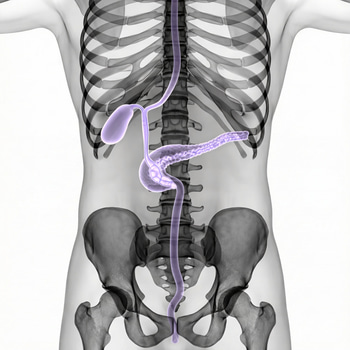
The gallbladder is a pear-shaped organ located beneath the liver. Its main function is to store bile, which is continuously produced by the liver , and then release it into the small intestine when needed, especially after fatty meals.

Function and anatomy

The gallbladder holds between 30–50 ml of bile. When we eat, the gallbladder contracts and pushes bile into the bile ducts and further into the intestine.

The role of bile in digestion

Bile contains bile salts, which help break down fat from food into small droplets. This allows enzymes from the pancreas to break down the fat more effectively so the body can absorb fatty acids and fat-soluble vitamins. In addition to fat digestion, bile also helps the body eliminate waste products such as bilirubin and excess cholesterol. In this way, bile has both a digestive and a detoxifying function.

Common conditions and diseases

Pain in the gallbladder is often due to gallstones blocking the bile duct or inflammation (cholecystitis). Recurrent gallstone attacks may require surgery.

Examination and diagnosis

Pain and gallbladder problems are often investigated with ultrasound . In more complicated cases, CT scans, ERCP, or MRI of the abdomen may be used. Blood tests show whether the liver is affected or if there is an infection.

Relevant symptoms

  • Severe pain in the upper right abdomen
  • Pain after fatty meals
  • Nausea and vomiting
  • Fever
  • Jaundice

Related conditions and diagnoses

  • Gallstones (cholelithiasis)
  • Cholecystitis (gallbladder inflammation)
  • Gallstone attacks
  • Pancreatitis caused by gallstones

Questions and answers

The primary function of the gallbladder is to store the bile produced in the liver and release it into the small intestine when needed. In this way, the fat in food can be broken down into smaller components and more easily absorbed by the body.

Gallstones are hard lumps that form in the gallbladder or bile ducts when the balance between different substances is disturbed. Most commonly, gallstones consist of cholesterol, but they can also contain bilirubin or calcium salts. They vary in size from tiny grains to stones several centimeters wide.


Gallstones often cause no symptoms at all, but when a stone gets stuck in a bile duct, the flow of bile can be blocked. This leads to sudden, intense pain in the upper right abdomen, known as a gallstone attack. The pain often occurs after meals, especially if fatty food has been eaten. If the blockage becomes prolonged, it can cause inflammation of the gallbladder (cholecystitis) or infection in the bile ducts (cholangitis).

A gallstone attack is characterized by sudden and very intense pain in the upper right part of the abdomen, or sometimes in the middle of the stomach just below the ribcage. The pain may radiate to the back, the right shoulder blade, or up toward the chest, and is often described as stabbing or cramping. In addition to the pain, nausea, vomiting, cold sweats, and a feeling of bloating are common.

Yes, it is possible to live without a gallbladder. In that case, bile flows directly from the liver into the intestine. Some people may experience loose stools or sensitivity to fatty foods as a result.

The gallbladder may be removed in cases of recurrent gallstone attacks, inflammation, or complications. The procedure is called cholecystectomy and is most often performed using keyhole (laparoscopic) surgery.

A balanced diet with fiber and regular exercise can reduce the risk of gallstones. Rapid weight loss and a high-fat diet, on the other hand, increase the risk of developing gallstones.

Gallstones are stones that form in the gallbladder or bile ducts. Cholecystitis is an inflammation of the gallbladder, often caused by a stone that has become stuck.

Tests related to Gallbladder


MRI Full body Plus

MRI Full body Plus

MRI + blood tests
Information

Biological age

This health check includes an analysis of your biological age. Biological age is a measure of how your body ages at the cellular level compared to your chronological age. Comparing your blood counts with advanced algorithms will give you a deeper insight into your overall health status and how your lifestyle affects your biological aging. Based on the PhenoAge method. https://pmc.ncbi.nlm.nih.gov/articles/PMC5940111/

Medical comment included

With us, you will always receive a doctor’s opinion from a licensed physician when you order a medical check-up that includes a medical opinion. The doctor’s opinion includes an overall assessment of your results from laboratory analysis. The opinion is individual and may vary depending on the specific tests your medical check-up includes.

What can I expect in the medical report?

The medical opinion will summarize the results of your test results to give you an assessment of your health including any abnormalities outside the reference ranges. In case of abnormalities or need, your doctor may also contact you for a free conversation to explain and talk about your results. Remember that a health check always includes specific test results based on your health and your personal circumstances. Values outside the reference range should therefore always be discussed with a doctor before any decisions regarding possible treatment are made.

What does the doctor look at during a health check?

When assessing a blood test or health check, your doctor will look at several different parameters to evaluate your health and identify any abnormalities. Below are some common aspects your doctor may examine:

Blood counts: Your doctor will check red, white and platelet counts to identify any signs of anaemia, infection or bleeding.

Nutrients and biochemical markers: Includes, for example, analysis and monitoring of blood sugar (glucose) levels, electrolyte levels (e.g. sodium, potassium), liver function tests (e.g. liver enzymes), kidney function tests (e.g. creatinine, urea) and lipid profile (e.g. cholesterol, triglycerides). The results of the tests give your doctor a better idea of your organ function, blood sugar level, cholesterol conditions and other important health aspects.

Inflammatory markers: Your doctor may measure health markers such as C-reactive protein (CRP) or red blood cell decrease rate (SR) to evaluate inflammatory conditions or confirm an active infection.

Hormone levels: Your doctor may monitor your hormone levels to assess hormonal imbalances or diseases, such as thyroid hormones (TSH, T3, T4), sex hormones or other specific hormones such as testosterone levels.

Specific tests: Depending on your goal of your health check or medical history, your doctor may look into specific tests to investigate conditions or diseases, such as diabetes, vitamin deficiency or autoimmune diseases.

In conclusion, the doctor weighs all test results based on the health check to assess your overall health, detect any abnormalities and identify possible underlying medical conditions.

What happens if I have abnormal test results?

If your blood count is abnormal, this will be addressed in your personal medical opinion. Depending on the nature and extent of the abnormality, your doctor may also contact you directly through the test result service for further guidance. Various measures and advice will be provided based on the specific abnormalities observed along with your medical history.

Call included

Call included, one of our doctors will contact you.
  • Radiation-free whole-body MRI examination.
  • 50+ blood tests for an extended medical overview.
  • Early detection of risks and diseases.

21 000 kr

MRI Full Body Pro

MRI Full Body Pro

MRI + blood tests + ECG
Information

Biological age

This health check includes an analysis of your biological age. Biological age is a measure of how your body ages at the cellular level compared to your chronological age. Comparing your blood counts with advanced algorithms will give you a deeper insight into your overall health status and how your lifestyle affects your biological aging. Based on the PhenoAge method. https://pmc.ncbi.nlm.nih.gov/articles/PMC5940111/

Medical comment included

With us, you will always receive a doctor’s opinion from a licensed physician when you order a medical check-up that includes a medical opinion. The doctor’s opinion includes an overall assessment of your results from laboratory analysis. The opinion is individual and may vary depending on the specific tests your medical check-up includes.

What can I expect in the medical report?

The medical opinion will summarize the results of your test results to give you an assessment of your health including any abnormalities outside the reference ranges. In case of abnormalities or need, your doctor may also contact you for a free conversation to explain and talk about your results. Remember that a health check always includes specific test results based on your health and your personal circumstances. Values outside the reference range should therefore always be discussed with a doctor before any decisions regarding possible treatment are made.

What does the doctor look at during a health check?

When assessing a blood test or health check, your doctor will look at several different parameters to evaluate your health and identify any abnormalities. Below are some common aspects your doctor may examine:

Blood counts: Your doctor will check red, white and platelet counts to identify any signs of anaemia, infection or bleeding.

Nutrients and biochemical markers: Includes, for example, analysis and monitoring of blood sugar (glucose) levels, electrolyte levels (e.g. sodium, potassium), liver function tests (e.g. liver enzymes), kidney function tests (e.g. creatinine, urea) and lipid profile (e.g. cholesterol, triglycerides). The results of the tests give your doctor a better idea of your organ function, blood sugar level, cholesterol conditions and other important health aspects.

Inflammatory markers: Your doctor may measure health markers such as C-reactive protein (CRP) or red blood cell decrease rate (SR) to evaluate inflammatory conditions or confirm an active infection.

Hormone levels: Your doctor may monitor your hormone levels to assess hormonal imbalances or diseases, such as thyroid hormones (TSH, T3, T4), sex hormones or other specific hormones such as testosterone levels.

Specific tests: Depending on your goal of your health check or medical history, your doctor may look into specific tests to investigate conditions or diseases, such as diabetes, vitamin deficiency or autoimmune diseases.

In conclusion, the doctor weighs all test results based on the health check to assess your overall health, detect any abnormalities and identify possible underlying medical conditions.

What happens if I have abnormal test results?

If your blood count is abnormal, this will be addressed in your personal medical opinion. Depending on the nature and extent of the abnormality, your doctor may also contact you directly through the test result service for further guidance. Various measures and advice will be provided based on the specific abnormalities observed along with your medical history.

Call included

Call included, one of our doctors will contact you.
  • Full body MRI scan.
  • 70+ blood tests incl. biological age.
  • Long-term ECG 5–7 days with ePatch.

23 900 kr


MRCP

MRCP

MRI of the biliary tract and pancreas
Information

Medical comment included

With us, you will always receive a doctor’s opinion from a licensed physician when you order a medical check-up that includes a medical opinion. The doctor’s opinion includes an overall assessment of your results from laboratory analysis. The opinion is individual and may vary depending on the specific tests your medical check-up includes.

What can I expect in the medical report?

The medical opinion will summarize the results of your test results to give you an assessment of your health including any abnormalities outside the reference ranges. In case of abnormalities or need, your doctor may also contact you for a free conversation to explain and talk about your results. Remember that a health check always includes specific test results based on your health and your personal circumstances. Values outside the reference range should therefore always be discussed with a doctor before any decisions regarding possible treatment are made.

What does the doctor look at during a health check?

When assessing a blood test or health check, your doctor will look at several different parameters to evaluate your health and identify any abnormalities. Below are some common aspects your doctor may examine:

Blood counts: Your doctor will check red, white and platelet counts to identify any signs of anaemia, infection or bleeding.

Nutrients and biochemical markers: Includes, for example, analysis and monitoring of blood sugar (glucose) levels, electrolyte levels (e.g. sodium, potassium), liver function tests (e.g. liver enzymes), kidney function tests (e.g. creatinine, urea) and lipid profile (e.g. cholesterol, triglycerides). The results of the tests give your doctor a better idea of your organ function, blood sugar level, cholesterol conditions and other important health aspects.

Inflammatory markers: Your doctor may measure health markers such as C-reactive protein (CRP) or red blood cell decrease rate (SR) to evaluate inflammatory conditions or confirm an active infection.

Hormone levels: Your doctor may monitor your hormone levels to assess hormonal imbalances or diseases, such as thyroid hormones (TSH, T3, T4), sex hormones or other specific hormones such as testosterone levels.

Specific tests: Depending on your goal of your health check or medical history, your doctor may look into specific tests to investigate conditions or diseases, such as diabetes, vitamin deficiency or autoimmune diseases.

In conclusion, the doctor weighs all test results based on the health check to assess your overall health, detect any abnormalities and identify possible underlying medical conditions.

What happens if I have abnormal test results?

If your blood count is abnormal, this will be addressed in your personal medical opinion. Depending on the nature and extent of the abnormality, your doctor may also contact you directly through the test result service for further guidance. Various measures and advice will be provided based on the specific abnormalities observed along with your medical history.

Call included

Call included, one of our doctors will contact you.
  • MRCP examines the biliary tract and pancreas in detail
  • Recommended for gallstones, pancreatitis or elevated liver values ​​
  • More accurate than abdominal MRI for biliary and pancreatic issues
  • Radiation-free examination with medical assessment and referral

7 695 kr

MRI Abdomen/MRCP

MRI Abdomen/MRCP

MRI of the abdomen
Information

Medical comment included

With us, you will always receive a doctor’s opinion from a licensed physician when you order a medical check-up that includes a medical opinion. The doctor’s opinion includes an overall assessment of your results from laboratory analysis. The opinion is individual and may vary depending on the specific tests your medical check-up includes.

What can I expect in the medical report?

The medical opinion will summarize the results of your test results to give you an assessment of your health including any abnormalities outside the reference ranges. In case of abnormalities or need, your doctor may also contact you for a free conversation to explain and talk about your results. Remember that a health check always includes specific test results based on your health and your personal circumstances. Values outside the reference range should therefore always be discussed with a doctor before any decisions regarding possible treatment are made.

What does the doctor look at during a health check?

When assessing a blood test or health check, your doctor will look at several different parameters to evaluate your health and identify any abnormalities. Below are some common aspects your doctor may examine:

Blood counts: Your doctor will check red, white and platelet counts to identify any signs of anaemia, infection or bleeding.

Nutrients and biochemical markers: Includes, for example, analysis and monitoring of blood sugar (glucose) levels, electrolyte levels (e.g. sodium, potassium), liver function tests (e.g. liver enzymes), kidney function tests (e.g. creatinine, urea) and lipid profile (e.g. cholesterol, triglycerides). The results of the tests give your doctor a better idea of your organ function, blood sugar level, cholesterol conditions and other important health aspects.

Inflammatory markers: Your doctor may measure health markers such as C-reactive protein (CRP) or red blood cell decrease rate (SR) to evaluate inflammatory conditions or confirm an active infection.

Hormone levels: Your doctor may monitor your hormone levels to assess hormonal imbalances or diseases, such as thyroid hormones (TSH, T3, T4), sex hormones or other specific hormones such as testosterone levels.

Specific tests: Depending on your goal of your health check or medical history, your doctor may look into specific tests to investigate conditions or diseases, such as diabetes, vitamin deficiency or autoimmune diseases.

In conclusion, the doctor weighs all test results based on the health check to assess your overall health, detect any abnormalities and identify possible underlying medical conditions.

What happens if I have abnormal test results?

If your blood count is abnormal, this will be addressed in your personal medical opinion. Depending on the nature and extent of the abnormality, your doctor may also contact you directly through the test result service for further guidance. Various measures and advice will be provided based on the specific abnormalities observed along with your medical history.

Call included

Call included, one of our doctors will contact you.
  • Abdominal MRI visualizes the liver, kidneys, bile ducts, and pancreas.
  • Recommended for abdominal pain or suspected abnormalities.
  • MRCP shows bile and pancreatic ducts – without contrast agents.
  • Radiation-free exam with referral and specialist report included.

6 995 kr

MRI Full Body

MRI Full Body

Magnetic resonance imaging
Information

Medical comment included

With us, you will always receive a doctor’s opinion from a licensed physician when you order a medical check-up that includes a medical opinion. The doctor’s opinion includes an overall assessment of your results from laboratory analysis. The opinion is individual and may vary depending on the specific tests your medical check-up includes.

What can I expect in the medical report?

The medical opinion will summarize the results of your test results to give you an assessment of your health including any abnormalities outside the reference ranges. In case of abnormalities or need, your doctor may also contact you for a free conversation to explain and talk about your results. Remember that a health check always includes specific test results based on your health and your personal circumstances. Values outside the reference range should therefore always be discussed with a doctor before any decisions regarding possible treatment are made.

What does the doctor look at during a health check?

When assessing a blood test or health check, your doctor will look at several different parameters to evaluate your health and identify any abnormalities. Below are some common aspects your doctor may examine:

Blood counts: Your doctor will check red, white and platelet counts to identify any signs of anaemia, infection or bleeding.

Nutrients and biochemical markers: Includes, for example, analysis and monitoring of blood sugar (glucose) levels, electrolyte levels (e.g. sodium, potassium), liver function tests (e.g. liver enzymes), kidney function tests (e.g. creatinine, urea) and lipid profile (e.g. cholesterol, triglycerides). The results of the tests give your doctor a better idea of your organ function, blood sugar level, cholesterol conditions and other important health aspects.

Inflammatory markers: Your doctor may measure health markers such as C-reactive protein (CRP) or red blood cell decrease rate (SR) to evaluate inflammatory conditions or confirm an active infection.

Hormone levels: Your doctor may monitor your hormone levels to assess hormonal imbalances or diseases, such as thyroid hormones (TSH, T3, T4), sex hormones or other specific hormones such as testosterone levels.

Specific tests: Depending on your goal of your health check or medical history, your doctor may look into specific tests to investigate conditions or diseases, such as diabetes, vitamin deficiency or autoimmune diseases.

In conclusion, the doctor weighs all test results based on the health check to assess your overall health, detect any abnormalities and identify possible underlying medical conditions.

What happens if I have abnormal test results?

If your blood count is abnormal, this will be addressed in your personal medical opinion. Depending on the nature and extent of the abnormality, your doctor may also contact you directly through the test result service for further guidance. Various measures and advice will be provided based on the specific abnormalities observed along with your medical history.

Call included

Call included, one of our doctors will contact you.
  • Magnetic camera examination of the full body
  • Recommended for those who are healthy for screening purposes
  • Detailed examination with magnetic camera
  • MRI full body, referral sent directly

19 995 kr

MRI Full body Plus

MRI Full body Plus

MRI + blood tests
Information

Biological age

This health check includes an analysis of your biological age. Biological age is a measure of how your body ages at the cellular level compared to your chronological age. Comparing your blood counts with advanced algorithms will give you a deeper insight into your overall health status and how your lifestyle affects your biological aging. Based on the PhenoAge method. https://pmc.ncbi.nlm.nih.gov/articles/PMC5940111/

Medical comment included

With us, you will always receive a doctor’s opinion from a licensed physician when you order a medical check-up that includes a medical opinion. The doctor’s opinion includes an overall assessment of your results from laboratory analysis. The opinion is individual and may vary depending on the specific tests your medical check-up includes.

What can I expect in the medical report?

The medical opinion will summarize the results of your test results to give you an assessment of your health including any abnormalities outside the reference ranges. In case of abnormalities or need, your doctor may also contact you for a free conversation to explain and talk about your results. Remember that a health check always includes specific test results based on your health and your personal circumstances. Values outside the reference range should therefore always be discussed with a doctor before any decisions regarding possible treatment are made.

What does the doctor look at during a health check?

When assessing a blood test or health check, your doctor will look at several different parameters to evaluate your health and identify any abnormalities. Below are some common aspects your doctor may examine:

Blood counts: Your doctor will check red, white and platelet counts to identify any signs of anaemia, infection or bleeding.

Nutrients and biochemical markers: Includes, for example, analysis and monitoring of blood sugar (glucose) levels, electrolyte levels (e.g. sodium, potassium), liver function tests (e.g. liver enzymes), kidney function tests (e.g. creatinine, urea) and lipid profile (e.g. cholesterol, triglycerides). The results of the tests give your doctor a better idea of your organ function, blood sugar level, cholesterol conditions and other important health aspects.

Inflammatory markers: Your doctor may measure health markers such as C-reactive protein (CRP) or red blood cell decrease rate (SR) to evaluate inflammatory conditions or confirm an active infection.

Hormone levels: Your doctor may monitor your hormone levels to assess hormonal imbalances or diseases, such as thyroid hormones (TSH, T3, T4), sex hormones or other specific hormones such as testosterone levels.

Specific tests: Depending on your goal of your health check or medical history, your doctor may look into specific tests to investigate conditions or diseases, such as diabetes, vitamin deficiency or autoimmune diseases.

In conclusion, the doctor weighs all test results based on the health check to assess your overall health, detect any abnormalities and identify possible underlying medical conditions.

What happens if I have abnormal test results?

If your blood count is abnormal, this will be addressed in your personal medical opinion. Depending on the nature and extent of the abnormality, your doctor may also contact you directly through the test result service for further guidance. Various measures and advice will be provided based on the specific abnormalities observed along with your medical history.

Call included

Call included, one of our doctors will contact you.
  • Radiation-free whole-body MRI examination.
  • 50+ blood tests for an extended medical overview.
  • Early detection of risks and diseases.

21 000 kr

MRI Full Body Pro

MRI Full Body Pro

MRI + blood tests + ECG
Information

Biological age

This health check includes an analysis of your biological age. Biological age is a measure of how your body ages at the cellular level compared to your chronological age. Comparing your blood counts with advanced algorithms will give you a deeper insight into your overall health status and how your lifestyle affects your biological aging. Based on the PhenoAge method. https://pmc.ncbi.nlm.nih.gov/articles/PMC5940111/

Medical comment included

With us, you will always receive a doctor’s opinion from a licensed physician when you order a medical check-up that includes a medical opinion. The doctor’s opinion includes an overall assessment of your results from laboratory analysis. The opinion is individual and may vary depending on the specific tests your medical check-up includes.

What can I expect in the medical report?

The medical opinion will summarize the results of your test results to give you an assessment of your health including any abnormalities outside the reference ranges. In case of abnormalities or need, your doctor may also contact you for a free conversation to explain and talk about your results. Remember that a health check always includes specific test results based on your health and your personal circumstances. Values outside the reference range should therefore always be discussed with a doctor before any decisions regarding possible treatment are made.

What does the doctor look at during a health check?

When assessing a blood test or health check, your doctor will look at several different parameters to evaluate your health and identify any abnormalities. Below are some common aspects your doctor may examine:

Blood counts: Your doctor will check red, white and platelet counts to identify any signs of anaemia, infection or bleeding.

Nutrients and biochemical markers: Includes, for example, analysis and monitoring of blood sugar (glucose) levels, electrolyte levels (e.g. sodium, potassium), liver function tests (e.g. liver enzymes), kidney function tests (e.g. creatinine, urea) and lipid profile (e.g. cholesterol, triglycerides). The results of the tests give your doctor a better idea of your organ function, blood sugar level, cholesterol conditions and other important health aspects.

Inflammatory markers: Your doctor may measure health markers such as C-reactive protein (CRP) or red blood cell decrease rate (SR) to evaluate inflammatory conditions or confirm an active infection.

Hormone levels: Your doctor may monitor your hormone levels to assess hormonal imbalances or diseases, such as thyroid hormones (TSH, T3, T4), sex hormones or other specific hormones such as testosterone levels.

Specific tests: Depending on your goal of your health check or medical history, your doctor may look into specific tests to investigate conditions or diseases, such as diabetes, vitamin deficiency or autoimmune diseases.

In conclusion, the doctor weighs all test results based on the health check to assess your overall health, detect any abnormalities and identify possible underlying medical conditions.

What happens if I have abnormal test results?

If your blood count is abnormal, this will be addressed in your personal medical opinion. Depending on the nature and extent of the abnormality, your doctor may also contact you directly through the test result service for further guidance. Various measures and advice will be provided based on the specific abnormalities observed along with your medical history.

Call included

Call included, one of our doctors will contact you.
  • Full body MRI scan.
  • 70+ blood tests incl. biological age.
  • Long-term ECG 5–7 days with ePatch.

23 900 kr

Ultrasound Gallbladder

Ultrasound Gallbladder

Ultrasound
Information

Medical comment included

With us, you will always receive a doctor’s opinion from a licensed physician when you order a medical check-up that includes a medical opinion. The doctor’s opinion includes an overall assessment of your results from laboratory analysis. The opinion is individual and may vary depending on the specific tests your medical check-up includes.

What can I expect in the medical report?

The medical opinion will summarize the results of your test results to give you an assessment of your health including any abnormalities outside the reference ranges. In case of abnormalities or need, your doctor may also contact you for a free conversation to explain and talk about your results. Remember that a health check always includes specific test results based on your health and your personal circumstances. Values outside the reference range should therefore always be discussed with a doctor before any decisions regarding possible treatment are made.

What does the doctor look at during a health check?

When assessing a blood test or health check, your doctor will look at several different parameters to evaluate your health and identify any abnormalities. Below are some common aspects your doctor may examine:

Blood counts: Your doctor will check red, white and platelet counts to identify any signs of anaemia, infection or bleeding.

Nutrients and biochemical markers: Includes, for example, analysis and monitoring of blood sugar (glucose) levels, electrolyte levels (e.g. sodium, potassium), liver function tests (e.g. liver enzymes), kidney function tests (e.g. creatinine, urea) and lipid profile (e.g. cholesterol, triglycerides). The results of the tests give your doctor a better idea of your organ function, blood sugar level, cholesterol conditions and other important health aspects.

Inflammatory markers: Your doctor may measure health markers such as C-reactive protein (CRP) or red blood cell decrease rate (SR) to evaluate inflammatory conditions or confirm an active infection.

Hormone levels: Your doctor may monitor your hormone levels to assess hormonal imbalances or diseases, such as thyroid hormones (TSH, T3, T4), sex hormones or other specific hormones such as testosterone levels.

Specific tests: Depending on your goal of your health check or medical history, your doctor may look into specific tests to investigate conditions or diseases, such as diabetes, vitamin deficiency or autoimmune diseases.

In conclusion, the doctor weighs all test results based on the health check to assess your overall health, detect any abnormalities and identify possible underlying medical conditions.

What happens if I have abnormal test results?

If your blood count is abnormal, this will be addressed in your personal medical opinion. Depending on the nature and extent of the abnormality, your doctor may also contact you directly through the test result service for further guidance. Various measures and advice will be provided based on the specific abnormalities observed along with your medical history.

  • Ultrasound of the gallbladder shows stones, inflammation, polyps and wall thickening.
  • Recommended for pain under the ribs, nausea or suspected gallstone disease.
  • Quick, painless and radiation-free examination of the gallbladder wall and contents.
  • Written opinion and recommendation from a specialist doctor are included.

2 239 kr


MRI Full Body

MRI Full Body

Magnetic resonance imaging
Information

Medical comment included

With us, you will always receive a doctor’s opinion from a licensed physician when you order a medical check-up that includes a medical opinion. The doctor’s opinion includes an overall assessment of your results from laboratory analysis. The opinion is individual and may vary depending on the specific tests your medical check-up includes.

What can I expect in the medical report?

The medical opinion will summarize the results of your test results to give you an assessment of your health including any abnormalities outside the reference ranges. In case of abnormalities or need, your doctor may also contact you for a free conversation to explain and talk about your results. Remember that a health check always includes specific test results based on your health and your personal circumstances. Values outside the reference range should therefore always be discussed with a doctor before any decisions regarding possible treatment are made.

What does the doctor look at during a health check?

When assessing a blood test or health check, your doctor will look at several different parameters to evaluate your health and identify any abnormalities. Below are some common aspects your doctor may examine:

Blood counts: Your doctor will check red, white and platelet counts to identify any signs of anaemia, infection or bleeding.

Nutrients and biochemical markers: Includes, for example, analysis and monitoring of blood sugar (glucose) levels, electrolyte levels (e.g. sodium, potassium), liver function tests (e.g. liver enzymes), kidney function tests (e.g. creatinine, urea) and lipid profile (e.g. cholesterol, triglycerides). The results of the tests give your doctor a better idea of your organ function, blood sugar level, cholesterol conditions and other important health aspects.

Inflammatory markers: Your doctor may measure health markers such as C-reactive protein (CRP) or red blood cell decrease rate (SR) to evaluate inflammatory conditions or confirm an active infection.

Hormone levels: Your doctor may monitor your hormone levels to assess hormonal imbalances or diseases, such as thyroid hormones (TSH, T3, T4), sex hormones or other specific hormones such as testosterone levels.

Specific tests: Depending on your goal of your health check or medical history, your doctor may look into specific tests to investigate conditions or diseases, such as diabetes, vitamin deficiency or autoimmune diseases.

In conclusion, the doctor weighs all test results based on the health check to assess your overall health, detect any abnormalities and identify possible underlying medical conditions.

What happens if I have abnormal test results?

If your blood count is abnormal, this will be addressed in your personal medical opinion. Depending on the nature and extent of the abnormality, your doctor may also contact you directly through the test result service for further guidance. Various measures and advice will be provided based on the specific abnormalities observed along with your medical history.

Call included

Call included, one of our doctors will contact you.
  • Magnetic camera examination of the full body
  • Recommended for those who are healthy for screening purposes
  • Detailed examination with magnetic camera
  • MRI full body, referral sent directly

19 995 kr

MRI Full body Plus

MRI Full body Plus

MRI + blood tests
Information

Biological age

This health check includes an analysis of your biological age. Biological age is a measure of how your body ages at the cellular level compared to your chronological age. Comparing your blood counts with advanced algorithms will give you a deeper insight into your overall health status and how your lifestyle affects your biological aging. Based on the PhenoAge method. https://pmc.ncbi.nlm.nih.gov/articles/PMC5940111/

Medical comment included

With us, you will always receive a doctor’s opinion from a licensed physician when you order a medical check-up that includes a medical opinion. The doctor’s opinion includes an overall assessment of your results from laboratory analysis. The opinion is individual and may vary depending on the specific tests your medical check-up includes.

What can I expect in the medical report?

The medical opinion will summarize the results of your test results to give you an assessment of your health including any abnormalities outside the reference ranges. In case of abnormalities or need, your doctor may also contact you for a free conversation to explain and talk about your results. Remember that a health check always includes specific test results based on your health and your personal circumstances. Values outside the reference range should therefore always be discussed with a doctor before any decisions regarding possible treatment are made.

What does the doctor look at during a health check?

When assessing a blood test or health check, your doctor will look at several different parameters to evaluate your health and identify any abnormalities. Below are some common aspects your doctor may examine:

Blood counts: Your doctor will check red, white and platelet counts to identify any signs of anaemia, infection or bleeding.

Nutrients and biochemical markers: Includes, for example, analysis and monitoring of blood sugar (glucose) levels, electrolyte levels (e.g. sodium, potassium), liver function tests (e.g. liver enzymes), kidney function tests (e.g. creatinine, urea) and lipid profile (e.g. cholesterol, triglycerides). The results of the tests give your doctor a better idea of your organ function, blood sugar level, cholesterol conditions and other important health aspects.

Inflammatory markers: Your doctor may measure health markers such as C-reactive protein (CRP) or red blood cell decrease rate (SR) to evaluate inflammatory conditions or confirm an active infection.

Hormone levels: Your doctor may monitor your hormone levels to assess hormonal imbalances or diseases, such as thyroid hormones (TSH, T3, T4), sex hormones or other specific hormones such as testosterone levels.

Specific tests: Depending on your goal of your health check or medical history, your doctor may look into specific tests to investigate conditions or diseases, such as diabetes, vitamin deficiency or autoimmune diseases.

In conclusion, the doctor weighs all test results based on the health check to assess your overall health, detect any abnormalities and identify possible underlying medical conditions.

What happens if I have abnormal test results?

If your blood count is abnormal, this will be addressed in your personal medical opinion. Depending on the nature and extent of the abnormality, your doctor may also contact you directly through the test result service for further guidance. Various measures and advice will be provided based on the specific abnormalities observed along with your medical history.

Call included

Call included, one of our doctors will contact you.
  • Radiation-free whole-body MRI examination.
  • 50+ blood tests for an extended medical overview.
  • Early detection of risks and diseases.

21 000 kr

MRI Full Body Pro

MRI Full Body Pro

MRI + blood tests + ECG
Information

Biological age

This health check includes an analysis of your biological age. Biological age is a measure of how your body ages at the cellular level compared to your chronological age. Comparing your blood counts with advanced algorithms will give you a deeper insight into your overall health status and how your lifestyle affects your biological aging. Based on the PhenoAge method. https://pmc.ncbi.nlm.nih.gov/articles/PMC5940111/

Medical comment included

With us, you will always receive a doctor’s opinion from a licensed physician when you order a medical check-up that includes a medical opinion. The doctor’s opinion includes an overall assessment of your results from laboratory analysis. The opinion is individual and may vary depending on the specific tests your medical check-up includes.

What can I expect in the medical report?

The medical opinion will summarize the results of your test results to give you an assessment of your health including any abnormalities outside the reference ranges. In case of abnormalities or need, your doctor may also contact you for a free conversation to explain and talk about your results. Remember that a health check always includes specific test results based on your health and your personal circumstances. Values outside the reference range should therefore always be discussed with a doctor before any decisions regarding possible treatment are made.

What does the doctor look at during a health check?

When assessing a blood test or health check, your doctor will look at several different parameters to evaluate your health and identify any abnormalities. Below are some common aspects your doctor may examine:

Blood counts: Your doctor will check red, white and platelet counts to identify any signs of anaemia, infection or bleeding.

Nutrients and biochemical markers: Includes, for example, analysis and monitoring of blood sugar (glucose) levels, electrolyte levels (e.g. sodium, potassium), liver function tests (e.g. liver enzymes), kidney function tests (e.g. creatinine, urea) and lipid profile (e.g. cholesterol, triglycerides). The results of the tests give your doctor a better idea of your organ function, blood sugar level, cholesterol conditions and other important health aspects.

Inflammatory markers: Your doctor may measure health markers such as C-reactive protein (CRP) or red blood cell decrease rate (SR) to evaluate inflammatory conditions or confirm an active infection.

Hormone levels: Your doctor may monitor your hormone levels to assess hormonal imbalances or diseases, such as thyroid hormones (TSH, T3, T4), sex hormones or other specific hormones such as testosterone levels.

Specific tests: Depending on your goal of your health check or medical history, your doctor may look into specific tests to investigate conditions or diseases, such as diabetes, vitamin deficiency or autoimmune diseases.

In conclusion, the doctor weighs all test results based on the health check to assess your overall health, detect any abnormalities and identify possible underlying medical conditions.

What happens if I have abnormal test results?

If your blood count is abnormal, this will be addressed in your personal medical opinion. Depending on the nature and extent of the abnormality, your doctor may also contact you directly through the test result service for further guidance. Various measures and advice will be provided based on the specific abnormalities observed along with your medical history.

Call included

Call included, one of our doctors will contact you.
  • Full body MRI scan.
  • 70+ blood tests incl. biological age.
  • Long-term ECG 5–7 days with ePatch.

23 900 kr

Cart

The basket is empty.

Hos oss får du tillgång till Sveriges bredaste utbud av blodprov, hälsokontroller och MR – med läkare som alltid granskar dina provsvar.

Select tests


Sampling fee
Total
Sampling fee?

The sample collection fee is a fixed cost that refers to the visit to the clinic where you submit your sample. The fee is not affected by how many tests you have ordered, but varies depending on the order value:

Free sampling fee

For purchases over 1 000 SEK, the sampling fee is included.