
Skip to content

Forearm

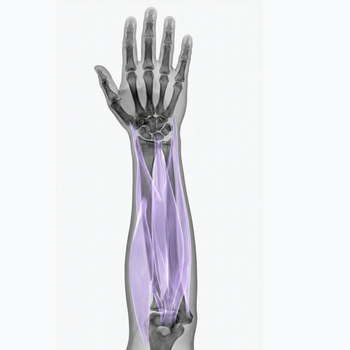
The forearm is an important part of the upper limb and consists of two bones as well as several muscles, nerves and blood vessels that enable movement and strength in the hand and wrist.

Quick version

What is the forearm?

The forearm is measured between the elbow and the wrist . It contains two long bones – one called the radius and the other called the ulna. The forearm also consists of a network of muscles, tendons, nerves, and blood vessels. It enables movements such as supination, which is when you turn your palm up, and pronation, which occurs when you turn your palm down.

The bone structure of the forearm

The bones of the forearm, the radius and ulna, are connected to each other via a ligament called the interosseous membrane, which provides stability and support for movement.

Muscles and movements

The muscles in the forearm are divided into two main groups - one is the flexor muscles (front side) and the other is the extensor muscles (back side). These muscles are responsible for bending and extending the fingers, wrist and elbow.

Nerves and blood vessels

There are several nerves in the forearm, but the most important nerves are the median, ulnar and radial nerves. The blood supply is provided by the radial and ulnar arteries. These structures are crucial for sensation and motor function in the hand and fingers.

Common injuries and problems

In the forearm, pain can often be due to muscle overexertion, inflammation of the tendons (tendinitis), nerve compression or fractures. Other examples of related conditions are tennis elbow and carpal tunnel syndrome.

Examination and treatment

Diagnosis is often made through clinical examination of the forearm and imaging studies such as X-rays or MRI . Treatment varies depending on the cause and may include rest, physical therapy, medication, or surgery.

Relevant symptoms

  • Pain in the forearm
  • Numbness or tingling in the hand
  • Weak grip strength
  • Swelling or stiffness
  • Tenderness to pressure
  • Limited wrist mobility

Related conditions and diagnoses

  • Tennis elbow (lateral epicondylitis)
  • Golfer's elbow (medial epicondylitis)
  • Carpal tunnel syndrome
  • Tendinitis in the wrist or elbow
  • Fracture of the radius or ulna
  • Nerve compression (e.g. cubital tunnel syndrome)
Questions and answers

A forearm consists of two bones, the radius and the ulna, as well as several muscles, nerves and blood vessels.

The forearm enables movements of both the hand and wrist and contributes to strength and precision.

The radius - the radius bone - is located on the outside and the ulna - the elbow bone - is located on the little finger side of a forearm.

When the forearm is overworked, it is common to experience symptoms such as pain, fatigue, and weakness during activity.

What is called tennis elbow is an overuse injury to the extensor muscles at the elbow.

Through rest, physical therapy, anti-inflammatory medications and sometimes surgery.

Yes, nerve compression (which is when surrounding tissues put pressure on a nerve) can cause numbness, tingling, and weakness in the hand.

Yes, muscle strains are common, especially when lifting heavy or performing repetitive stress.

The forearm is crucial for precise movements, thanks to the interaction between muscles and nerves in the forearm.

If you experience persistent pain, numbness, weakness, or a suspected fracture, you should seek medical attention for your symptoms.

Tests related to Forearm


MRI Forearm

MRI Forearm

Magnetic Resonance Imaging
Information

Medical comment included

With us, you will always receive a doctor’s opinion from a licensed physician when you order a medical check-up that includes a medical opinion. The doctor’s opinion includes an overall assessment of your results from laboratory analysis. The opinion is individual and may vary depending on the specific tests your medical check-up includes.

What can I expect in the medical report?

The medical opinion will summarize the results of your test results to give you an assessment of your health including any abnormalities outside the reference ranges. In case of abnormalities or need, your doctor may also contact you for a free conversation to explain and talk about your results. Remember that a health check always includes specific test results based on your health and your personal circumstances. Values outside the reference range should therefore always be discussed with a doctor before any decisions regarding possible treatment are made.

What does the doctor look at during a health check?

When assessing a blood test or health check, your doctor will look at several different parameters to evaluate your health and identify any abnormalities. Below are some common aspects your doctor may examine:

Blood counts: Your doctor will check red, white and platelet counts to identify any signs of anaemia, infection or bleeding.

Nutrients and biochemical markers: Includes, for example, analysis and monitoring of blood sugar (glucose) levels, electrolyte levels (e.g. sodium, potassium), liver function tests (e.g. liver enzymes), kidney function tests (e.g. creatinine, urea) and lipid profile (e.g. cholesterol, triglycerides). The results of the tests give your doctor a better idea of your organ function, blood sugar level, cholesterol conditions and other important health aspects.

Inflammatory markers: Your doctor may measure health markers such as C-reactive protein (CRP) or red blood cell decrease rate (SR) to evaluate inflammatory conditions or confirm an active infection.

Hormone levels: Your doctor may monitor your hormone levels to assess hormonal imbalances or diseases, such as thyroid hormones (TSH, T3, T4), sex hormones or other specific hormones such as testosterone levels.

Specific tests: Depending on your goal of your health check or medical history, your doctor may look into specific tests to investigate conditions or diseases, such as diabetes, vitamin deficiency or autoimmune diseases.

In conclusion, the doctor weighs all test results based on the health check to assess your overall health, detect any abnormalities and identify possible underlying medical conditions.

What happens if I have abnormal test results?

If your blood count is abnormal, this will be addressed in your personal medical opinion. Depending on the nature and extent of the abnormality, your doctor may also contact you directly through the test result service for further guidance. Various measures and advice will be provided based on the specific abnormalities observed along with your medical history.

Call included

Call included, one of our doctors will contact you.
  • MRI Forearm – magnetic resonance imaging of the bones, muscles, tendons and nerves in the forearm.
  • Recommended for pain, numbness, suspected nerve compression or soft tissue injury.
  • Provides high-resolution images without radiation – especially valuable when X-rays are not enough.
  • Painless examination with referral and medical opinion from a specialist.

3 795 kr

Cart

The basket is empty.

Hos oss får du tillgång till Sveriges bredaste utbud av blodprov, hälsokontroller och MR – med läkare som alltid granskar dina provsvar.

Select tests


Sampling fee
Total
Sampling fee?

The sample collection fee is a fixed cost that refers to the visit to the clinic where you submit your sample. The fee is not affected by how many tests you have ordered, but varies depending on the order value:

Free sampling fee

For purchases over 1 000 SEK, the sampling fee is included.