
Skip to content

Wrist

The wrist is a complex joint that connects the forearm to the hand and allows for movement in multiple directions. It is important for fine motor skills and everyday movements.

Quick version

What is the wrist?

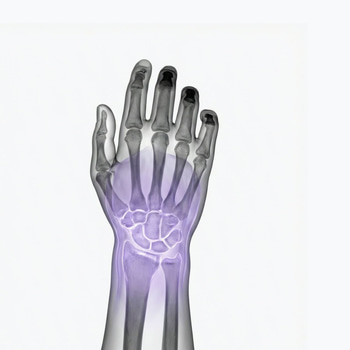
The wrist, or carpus, is the joint between the forearm bones (radius and ulna) and the eight small carpal bones of the hand. It allows for flexion, extension, and lateral bending, making it central to most hand movements.

Anatomy and structure

The wrist joint consists of several small bones (carpal bones), ligaments, tendons, and nerves. Together, these create a stable but mobile structure. The most important bones include the scaphoid, lunate, and triquetrum.

Function and movements

The wrist joint allows for movements that can bend (flexion), stretch (extension), bend inward and outward (radial and ulnar deviation), and some rotation. These movements are crucial for grip and precision.

Nerves and blood supply

The nerve supply comes mainly from the median, ulnar and radial nerves. The blood supply is through branches from the radial and ulnar arteries.

Common conditions and diseases

Pain in the wrist can be due to overload, inflammation or injury. Common conditions are carpal tunnel syndrome, wrist osteoarthritis, tendonitis and sprains.

Examination and diagnosis

Diagnosis is made through physical examination, history and often imaging diagnostics such as X-rays, ultrasound or MRI of the wrist . If nerve entrapment is suspected, tests such as the phalanx and tinel's tests are used.

Relevant symptoms

  • Pain with movement or at rest
  • Swelling around the wrist
  • Numbness in the hand and fingers
  • Reduced grip strength
  • Clicking noises or instability

Related conditions and diagnoses

  • Carpal tunnel syndrome
  • Wrist osteoarthritis
  • Sprain (distortion)
  • Ganglion (tendon knot)
  • De Quervain's tendinopathy (tendon sheath inflammation)
Questions and answers

Wrist pain is often caused by overuse, injuries such as sprains or fractures, and inflammation of tendons or joints. Carpal tunnel syndrome is a common cause of numbness and pain in the front of the wrist.

Treatment for carpal tunnel syndrome may include a wrist splint, anti-inflammatory medication, cortisone injections, or in more severe cases, surgery. Early diagnosis is important to avoid permanent nerve damage.

Yes, in many cases specific exercises for mobility and strength help. Physiotherapy is often recommended. However, it is important to avoid overuse and to get the right diagnosis first.

Specialists such as orthopedists and hand surgeons assess and treat wrist problems. General practitioners or physiotherapists can also make an initial assessment.

It is a fluid-filled lump that often sits over a joint or tendon, usually in the wrist. A ganglion is benign but can cause pain or discomfort with movement.

A sprained wrist often occurs from a fall or twist. Common symptoms include pain, swelling, and decreased mobility. An X-ray may be needed to rule out a fracture.

The difference is that carpal tunnel syndrome involves a pinched nerve, while tendinitis is an irritation of the tendons. The symptoms are similar in both conditions, but different treatments are required.

It varies depending on the nature of the injury. A minor sprain can heal in a few weeks, while fractures or surgeries may require several months and rehabilitation.

Tests related to Wrist


MRI Wrist

MRI Wrist

Magnetic resonance imaging
Information

Medical comment included

With us, you will always receive a doctor’s opinion from a licensed physician when you order a medical check-up that includes a medical opinion. The doctor’s opinion includes an overall assessment of your results from laboratory analysis. The opinion is individual and may vary depending on the specific tests your medical check-up includes.

What can I expect in the medical report?

The medical opinion will summarize the results of your test results to give you an assessment of your health including any abnormalities outside the reference ranges. In case of abnormalities or need, your doctor may also contact you for a free conversation to explain and talk about your results. Remember that a health check always includes specific test results based on your health and your personal circumstances. Values outside the reference range should therefore always be discussed with a doctor before any decisions regarding possible treatment are made.

What does the doctor look at during a health check?

When assessing a blood test or health check, your doctor will look at several different parameters to evaluate your health and identify any abnormalities. Below are some common aspects your doctor may examine:

Blood counts: Your doctor will check red, white and platelet counts to identify any signs of anaemia, infection or bleeding.

Nutrients and biochemical markers: Includes, for example, analysis and monitoring of blood sugar (glucose) levels, electrolyte levels (e.g. sodium, potassium), liver function tests (e.g. liver enzymes), kidney function tests (e.g. creatinine, urea) and lipid profile (e.g. cholesterol, triglycerides). The results of the tests give your doctor a better idea of your organ function, blood sugar level, cholesterol conditions and other important health aspects.

Inflammatory markers: Your doctor may measure health markers such as C-reactive protein (CRP) or red blood cell decrease rate (SR) to evaluate inflammatory conditions or confirm an active infection.

Hormone levels: Your doctor may monitor your hormone levels to assess hormonal imbalances or diseases, such as thyroid hormones (TSH, T3, T4), sex hormones or other specific hormones such as testosterone levels.

Specific tests: Depending on your goal of your health check or medical history, your doctor may look into specific tests to investigate conditions or diseases, such as diabetes, vitamin deficiency or autoimmune diseases.

In conclusion, the doctor weighs all test results based on the health check to assess your overall health, detect any abnormalities and identify possible underlying medical conditions.

What happens if I have abnormal test results?

If your blood count is abnormal, this will be addressed in your personal medical opinion. Depending on the nature and extent of the abnormality, your doctor may also contact you directly through the test result service for further guidance. Various measures and advice will be provided based on the specific abnormalities observed along with your medical history.

Call included

Call included, one of our doctors will contact you.
  • Magnetic camera examination of the wrist without referral
  • Recommended for wrist pain or suspected ligament injury
  • Detailed MRI examination of tendons, joints and nerves
  • Quick booking and response – painless examination at Unilabs

4 495 kr

Cart

The basket is empty.

Hos oss får du tillgång till Sveriges bredaste utbud av blodprov, hälsokontroller och MR – med läkare som alltid granskar dina provsvar.

Select tests


Sampling fee
Total
Sampling fee?

The sample collection fee is a fixed cost that refers to the visit to the clinic where you submit your sample. The fee is not affected by how many tests you have ordered, but varies depending on the order value:

Free sampling fee

For purchases over 1 000 SEK, the sampling fee is included.