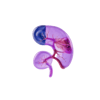
General Information About Kidney Stones
Kidney stones are hard, crystalline deposits that form in the urinary tract when certain substances in the urine become too concentrated. These stones vary in size and can move through the urinary tract, but larger stones may cause discomfort and complications. In most cases, kidney stone attacks can be alleviated with pain relief and increased fluid intake. Fluids help dilute the urine and flush the kidney stones, allowing them to continue their journey through the ureter to the bladder and exit during urination.
Causes of Kidney Stones
Kidney stones form when certain substances in the urine become too concentrated leading to the formation of hard crystals. The causes of kidney stones can vary, and different factors can increase the risk of their formation. Here are some common causes of kidney stones:
- Inadequate Fluid Intake: Insufficient fluid intake can increase the concentration of substances in the urine, raising the risk of kidney stones. Adequate fluid intake helps dilute these substances and promotes their natural elimination.
- Diet: Certain diets, especially those rich in oxalate-containing foods like spinach, chocolate, nuts, and certain berries, can increase the formation of oxalate crystals in the urine, a common type of kidney stone.
- Family History: Genetic factors may play a role, and individuals with a family history of kidney stones are at a greater risk of developing them.
- Overweight: Overweight individuals have an increased risk of kidney stones. Elevated body weight can affect metabolism and increase the excretion of calcium and other substances in the urine.
- Certain Medications: The use of certain medications, including diuretics, calcium-containing antacids, and some antibiotics, can increase the risk of kidney stones.
- Underlying Medical Conditions: Certain medical conditions, such as hyperparathyroidism (overactivity of the parathyroid glands) and cystinuria (a genetic disorder affecting the metabolism of the amino acid cystine), can increase the risk of kidney stones.
- Age and Gender: The risk of kidney stones increases with age, and men generally have a higher risk than women.
- Dehydration: Severe dehydration, especially in association with heat or exercise, can lead to the concentration of substances in the urine and increase the risk of kidney stones.
Symptoms of Kidney Stones
Symptoms of kidney stones vary depending on the size and location of the stone in the urinary tract. Here are some common symptoms of kidney stones:
- Intense Pain: Pain is often the most prominent symptom. The pain can be sharp and sudden, concentrated in the side or back, and radiate to the lower abdomen and groin. The pain is sometimes associated with renal colic when the stone moves through the ureter.
- Painful Urination: As the stone moves through the urinary tract, it can cause pain and discomfort during urination. A burning sensation may also be present.
- Blood in Urine: Irritation of the urinary tract by the stone may result in blood in the urine (hematuria). The blood may be visible or detected through laboratory tests.
- Frequent Urination: Individuals may feel the urge to urinate more frequently than usual, with a sense of urgency.
- Nausea and Vomiting: The pain from kidney stones can be intense enough to trigger nausea and vomiting in some individuals.
- Fever and Chills: If the kidney stone leads to a urinary tract infection, the person may experience fever and chills.
It is important to note that symptoms can vary from person to person, and some individuals may have kidney stones without experiencing any symptoms, especially if the stone is small and passes through the urinary tract without issues.
If someone experiences severe pain, blood in the urine, or other symptoms suggestive of kidney stones it is crucial to seek medical help.
Treatment of Kidney Stones
The treatment of kidney stones varies depending on the size, type, and location of the stone, as well as the individual's symptoms and overall health. Here are some common treatment options for kidney stones:
- Fluid Intake: For small kidney stones, the doctor may recommend increased fluid intake. Drinking plenty of water can dilute the urine, facilitating the passage of small stones through the urinary tract.
- Pain Relief: Pain relievers such as ibuprofen or acetaminophen can be used for pain management. Stronger pain medications may be necessary in some cases.
- Alpha-Blockers: The doctor may prescribe alpha-blockers to relax the muscles in the ureter and facilitate the passage of kidney stones.
- Extracorporeal Shock Wave Lithotripsy (ESWL): ESWL is a non-invasive procedure that uses shock waves to break the kidney stone into smaller pieces, making it easier to pass through the urinary tract.
- Ureteroscopy: By using a thin, tube-like camera inserted through the urethra and up into the ureter, the doctor can visualize and sometimes remove kidney stones.
- Surgery: In some cases, surgical removal of the stone may be necessary, especially if the stone is too large to pass naturally or if there are complications.
- Medications to Dissolve Stones: Some types of kidney stones, such as those formed by uric acid, can be treated with medications that help dissolve the stone.
- Preventive Measures: After an episode of kidney stones, the doctor may recommend lifestyle changes and medications to prevent future stone formation. This may include increased fluid intake, dietary modifications, and medications to reduce the concentration of substances contributing to stone formation.