Skip to content

Spine

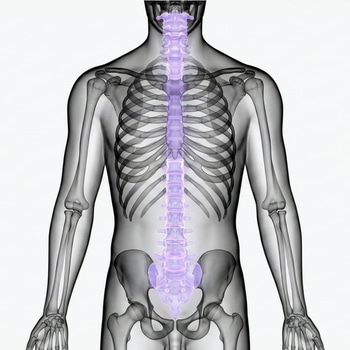
The spine, sometimes also referred to as the vertebral column, is the body’s central support and serves several vital functions. It provides stability and mobility, protects the spinal cord, and acts as an attachment point for muscles and ligaments.

Quick version

What is the spine?

The spine consists of 33 vertebrae divided into cervical, thoracic, lumbar, sacral, and coccygeal segments. The vertebral column forms natural curves that help distribute load and absorb shocks when we stand, walk, and run. Inside the spine runs the spinal cord, which is part of the central nervous system. The spinal cord is crucial for transmitting signals between the brain and the rest of the body.

Anatomy of the spine

The vertebrae of the spine are separated by intervertebral discs, which function as the body’s shock absorbers. The vertebrae are held together by ligaments and supported by strong muscles that enable us to move and maintain a stable posture.

Function of the spine

The spine supports the body’s entire weight and is essential for allowing movement in different directions. It also protects the spinal cord and serves as an attachment point for muscles and ribs.

Curves of the spine

A healthy spine has four natural curves: cervical lordosis, thoracic kyphosis, lumbar lordosis, and sacral kyphosis. These contribute to the body’s balance and provide shock absorption.

Common conditions and diseases

Pain in the spine can be caused by conditions such as herniated discs, scoliosis, spinal stenosis, osteoarthritis, or muscle tension. Accidents and poor posture are also common causes of spinal problems.

Examination and diagnosis

If you have spine-related problems, a clinical examination is usually performed first. The examination may then be complemented by imaging such as X-ray, MRI, and CT scans, as well as neurological tests to determine the cause of the pain and assess the extent of the injury. We can help you identify the reason for your back pain through a

Relevant symptoms

  • Back pain
  • Numbness or tingling
  • Weakness in arms or legs
  • Limited mobility
  • Impaired balance

Related conditions and diagnoses

  • Herniated disc
  • Scoliosis
  • Spinal stenosis
  • Spinal cord injury
  • Spinal osteoarthritis

Questions and answers

The spine consists of a total of 33 vertebrae: 7 cervical vertebrae, 12 thoracic vertebrae, 5 lumbar vertebrae, 5 fused sacral vertebrae, and 4 fused coccygeal vertebrae.

A herniated disc occurs when an intervertebral disc bulges out and puts pressure on nerves, which can cause pain, numbness, or muscle weakness.

The spinal cord transmits signals between the brain and the rest of the body, such as motor signals from the brain to the muscles and sensory signals from the body to the brain. The spinal cord also contains neural circuits that control reflexes and quick, automatic reactions without the involvement of the brain.

Scoliosis is a sideways curvature of the spine, sometimes combined with a slight rotation of the vertebrae. A healthy spine should be straight when viewed from behind, but in scoliosis it instead has an S-shaped or C-shaped curve. Scoliosis can be present from birth or develop during childhood or adolescence.

Yes, by maintaining good posture, exercising regularly, doing strength training, and using ergonomic working positions, you can reduce the risk of injuries and back pain.

Most back pain is temporary and harmless, but persistent or severe symptoms should be examined by a doctor.

Some exercise can be beneficial, but it is important to adapt the exercises and consult a physiotherapist. Stop exercising immediately if you experience pain.

Tests related to Spine


MRI fullback

MRI fullback

MRI
Information

Medical comment included

With us, you will always receive a doctor’s opinion from a licensed physician when you order a medical check-up that includes a medical opinion. The doctor’s opinion includes an overall assessment of your results from laboratory analysis. The opinion is individual and may vary depending on the specific tests your medical check-up includes.

What can I expect in the medical report?

The medical opinion will summarize the results of your test results to give you an assessment of your health including any abnormalities outside the reference ranges. In case of abnormalities or need, your doctor may also contact you for a free conversation to explain and talk about your results. Remember that a health check always includes specific test results based on your health and your personal circumstances. Values outside the reference range should therefore always be discussed with a doctor before any decisions regarding possible treatment are made.

What does the doctor look at during a health check?

When assessing a blood test or health check, your doctor will look at several different parameters to evaluate your health and identify any abnormalities. Below are some common aspects your doctor may examine:

Blood counts: Your doctor will check red, white and platelet counts to identify any signs of anaemia, infection or bleeding.

Nutrients and biochemical markers: Includes, for example, analysis and monitoring of blood sugar (glucose) levels, electrolyte levels (e.g. sodium, potassium), liver function tests (e.g. liver enzymes), kidney function tests (e.g. creatinine, urea) and lipid profile (e.g. cholesterol, triglycerides). The results of the tests give your doctor a better idea of your organ function, blood sugar level, cholesterol conditions and other important health aspects.

Inflammatory markers: Your doctor may measure health markers such as C-reactive protein (CRP) or red blood cell decrease rate (SR) to evaluate inflammatory conditions or confirm an active infection.

Hormone levels: Your doctor may monitor your hormone levels to assess hormonal imbalances or diseases, such as thyroid hormones (TSH, T3, T4), sex hormones or other specific hormones such as testosterone levels.

Specific tests: Depending on your goal of your health check or medical history, your doctor may look into specific tests to investigate conditions or diseases, such as diabetes, vitamin deficiency or autoimmune diseases.

In conclusion, the doctor weighs all test results based on the health check to assess your overall health, detect any abnormalities and identify possible underlying medical conditions.

What happens if I have abnormal test results?

If your blood count is abnormal, this will be addressed in your personal medical opinion. Depending on the nature and extent of the abnormality, your doctor may also contact you directly through the test result service for further guidance. Various measures and advice will be provided based on the specific abnormalities observed along with your medical history.

Call included

Call included, one of our doctors will contact you.
  • Magnetic resonance imaging of the entire spine – cervical, thoracic and lumbar.
  • Recommended for those with more extensive or diffuse back problems.
  • Detailed and radiation-free examination with magnetic resonance imaging.
  • MRI of the entire back – referral sent immediately.

13 995 kr


MRI fullback

MRI fullback

MRI
Information

Medical comment included

With us, you will always receive a doctor’s opinion from a licensed physician when you order a medical check-up that includes a medical opinion. The doctor’s opinion includes an overall assessment of your results from laboratory analysis. The opinion is individual and may vary depending on the specific tests your medical check-up includes.

What can I expect in the medical report?

The medical opinion will summarize the results of your test results to give you an assessment of your health including any abnormalities outside the reference ranges. In case of abnormalities or need, your doctor may also contact you for a free conversation to explain and talk about your results. Remember that a health check always includes specific test results based on your health and your personal circumstances. Values outside the reference range should therefore always be discussed with a doctor before any decisions regarding possible treatment are made.

What does the doctor look at during a health check?

When assessing a blood test or health check, your doctor will look at several different parameters to evaluate your health and identify any abnormalities. Below are some common aspects your doctor may examine:

Blood counts: Your doctor will check red, white and platelet counts to identify any signs of anaemia, infection or bleeding.

Nutrients and biochemical markers: Includes, for example, analysis and monitoring of blood sugar (glucose) levels, electrolyte levels (e.g. sodium, potassium), liver function tests (e.g. liver enzymes), kidney function tests (e.g. creatinine, urea) and lipid profile (e.g. cholesterol, triglycerides). The results of the tests give your doctor a better idea of your organ function, blood sugar level, cholesterol conditions and other important health aspects.

Inflammatory markers: Your doctor may measure health markers such as C-reactive protein (CRP) or red blood cell decrease rate (SR) to evaluate inflammatory conditions or confirm an active infection.

Hormone levels: Your doctor may monitor your hormone levels to assess hormonal imbalances or diseases, such as thyroid hormones (TSH, T3, T4), sex hormones or other specific hormones such as testosterone levels.

Specific tests: Depending on your goal of your health check or medical history, your doctor may look into specific tests to investigate conditions or diseases, such as diabetes, vitamin deficiency or autoimmune diseases.

In conclusion, the doctor weighs all test results based on the health check to assess your overall health, detect any abnormalities and identify possible underlying medical conditions.

What happens if I have abnormal test results?

If your blood count is abnormal, this will be addressed in your personal medical opinion. Depending on the nature and extent of the abnormality, your doctor may also contact you directly through the test result service for further guidance. Various measures and advice will be provided based on the specific abnormalities observed along with your medical history.

Call included

Call included, one of our doctors will contact you.
  • Magnetic resonance imaging of the entire spine – cervical, thoracic and lumbar.
  • Recommended for those with more extensive or diffuse back problems.
  • Detailed and radiation-free examination with magnetic resonance imaging.
  • MRI of the entire back – referral sent immediately.

13 995 kr

Cart

The basket is empty.

Hos oss får du tillgång till Sveriges bredaste utbud av blodprov, hälsokontroller och MR – med läkare som alltid granskar dina provsvar.

Select tests


Sampling fee
Total
Sampling fee?

The sample collection fee is a fixed cost that refers to the visit to the clinic where you submit your sample. The fee is not affected by how many tests you have ordered, but varies depending on the order value:

Free sampling fee

For purchases over 1 000 SEK, the sampling fee is included.