Skip to content

Pituitary Gland

The pituitary gland is a gland in the brain that, despite its small size, controls several of the body’s most important functions. It takes orders from the hypothalamus and regulates the body’s hormone system. The function of the pituitary gland affects everything from growth to metabolism and fertility.

Quick version

What is the pituitary gland?

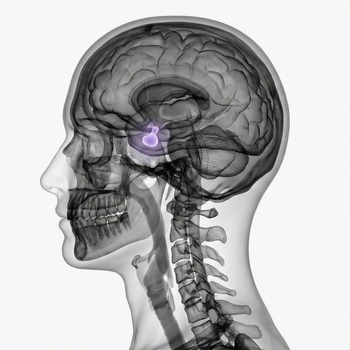
The pituitary gland is a gland located in the bony structure called the sella turcica at the base of the brain. The pituitary gland is as small as a pea, but plays a crucial role in regulating the body’s endocrine system by secreting hormones that affect other glands and organs.

Parts of the pituitary gland

The pituitary gland consists of two main parts: the anterior lobe (adenohypophysis) and the posterior lobe (neurohypophysis). These have different functions and produce different types of hormones.

Hormone production

The pituitary gland produces a variety of hormones, such as growth hormone (GH), thyroid-stimulating hormone (TSH), adrenocorticotropic hormone (ACTH), prolactin, as well as hormones that affect the gonads (LH and FSH).

The pituitary gland and body functions

The gland regulates functions such as growth, metabolism, reproduction, fluid balance, and the body’s response to stress. The activity of the pituitary gland is controlled by the hypothalamus, which acts as a control center in the brain. The hypothalamus registers signals from the body, and the pituitary gland then receives these signals and regulates hormones as needed.

Common conditions and diseases

Pain in the pituitary gland is rare, but various diseases can affect its function. Common conditions include tumors (adenomas), pituitary insufficiency, acromegaly, Cushing’s disease, and prolactinoma. These conditions can lead to hormonal imbalances with varying symptoms.

Examination and diagnosis

To examine the pituitary gland, blood tests, eye examinations, and magnetic resonance imaging (MRI) of the brain are often performed. Diagnosis is based on a combination of laboratory analyses and imaging.

Relevant symptoms

  • Fatigue and lack of energy
  • Headache and vision problems
  • Weight gain or weight loss
  • Irregular menstruation or infertility
  • Increased thirst and frequent urination

Related conditions and diagnoses

  • Pituitary tumor
  • Acromegaly
  • Cushing’s disease
  • Diabetes insipidus
  • Hypopituitarism

Questions and answers

The pituitary gland regulates the body’s hormonal system by controlling other glands, such as the thyroid, adrenal glands, and gonads. Its function affects metabolism, growth, fertility, and the body’s stress responses.

The pituitary gland is located in a bony cavity at the base of the brain called the sella turcica, near the optic nerve and the hypothalamus.

If the pituitary gland is removed or damaged, lifelong hormone replacement therapy is required to substitute its functions. It is possible to live without the pituitary gland, but it requires careful medical treatment.

Common diseases include pituitary tumors (adenomas), hypopituitarism, acromegaly, Cushing’s disease, and prolactinoma. These conditions can cause hormonal imbalances and a variety of symptoms affecting multiple organ systems.

The symptoms depend on the tumor’s size and hormonal activity. Common signs include headaches, vision problems, hormonal imbalances, menstrual disturbances, and infertility.

Most pituitary tumors are benign and grow slowly. Some produce an excess of hormones and may require treatment, while others are only monitored regularly.

Yes, since the pituitary gland is located close to the optic nerve, a tumor can cause visual field loss or other vision problems if it presses on the optic pathways.

The pituitary gland produces hormones (LH and FSH) that regulate ovulation in women and sperm production in men. Disorders of the pituitary can therefore lead to infertility.

Treatment may include medication, surgery, or radiation therapy depending on the type of disorder. In cases of hormone deficiency, hormone replacement therapy is given to normalize the body’s functions.

Diagnosis is made through hormone tests, eye examinations, and imaging, most often with magnetic resonance imaging (MRI) of the brain to detect any abnormalities.

Tests related to Pituitary Gland


MRI Pituitary gland

MRI Pituitary gland

Magnetic resonance imaging
Information

Medical comment included

With us, you will always receive a doctor’s opinion from a licensed physician when you order a medical check-up that includes a medical opinion. The doctor’s opinion includes an overall assessment of your results from laboratory analysis. The opinion is individual and may vary depending on the specific tests your medical check-up includes.

What can I expect in the medical report?

The medical opinion will summarize the results of your test results to give you an assessment of your health including any abnormalities outside the reference ranges. In case of abnormalities or need, your doctor may also contact you for a free conversation to explain and talk about your results. Remember that a health check always includes specific test results based on your health and your personal circumstances. Values outside the reference range should therefore always be discussed with a doctor before any decisions regarding possible treatment are made.

What does the doctor look at during a health check?

When assessing a blood test or health check, your doctor will look at several different parameters to evaluate your health and identify any abnormalities. Below are some common aspects your doctor may examine:

Blood counts: Your doctor will check red, white and platelet counts to identify any signs of anaemia, infection or bleeding.

Nutrients and biochemical markers: Includes, for example, analysis and monitoring of blood sugar (glucose) levels, electrolyte levels (e.g. sodium, potassium), liver function tests (e.g. liver enzymes), kidney function tests (e.g. creatinine, urea) and lipid profile (e.g. cholesterol, triglycerides). The results of the tests give your doctor a better idea of your organ function, blood sugar level, cholesterol conditions and other important health aspects.

Inflammatory markers: Your doctor may measure health markers such as C-reactive protein (CRP) or red blood cell decrease rate (SR) to evaluate inflammatory conditions or confirm an active infection.

Hormone levels: Your doctor may monitor your hormone levels to assess hormonal imbalances or diseases, such as thyroid hormones (TSH, T3, T4), sex hormones or other specific hormones such as testosterone levels.

Specific tests: Depending on your goal of your health check or medical history, your doctor may look into specific tests to investigate conditions or diseases, such as diabetes, vitamin deficiency or autoimmune diseases.

In conclusion, the doctor weighs all test results based on the health check to assess your overall health, detect any abnormalities and identify possible underlying medical conditions.

What happens if I have abnormal test results?

If your blood count is abnormal, this will be addressed in your personal medical opinion. Depending on the nature and extent of the abnormality, your doctor may also contact you directly through the test result service for further guidance. Various measures and advice will be provided based on the specific abnormalities observed along with your medical history.

Call included

Call included, one of our doctors will contact you.
  • MRI of the pituitary gland, pituitary stalk and surrounding structures.
  • Recommended for hormonal disorders, visual impairment or suspected pituitary tumor.
  • Referral and specialist assessment included – with report within a few days.

4 495 kr

Cart

The basket is empty.

Hos oss får du tillgång till Sveriges bredaste utbud av blodprov, hälsokontroller och MR – med läkare som alltid granskar dina provsvar.

Select tests


Sampling fee
Total
Sampling fee?

The sample collection fee is a fixed cost that refers to the visit to the clinic where you submit your sample. The fee is not affected by how many tests you have ordered, but varies depending on the order value:

Free sampling fee

For purchases over 1 000 SEK, the sampling fee is included.