Skip to content

Foot

The foot is a complex structure that supports the body's weight and enables movement. It consists of bones, muscles, tendons, and joints that work together for balance and gait.

Quick version

What is the foot?

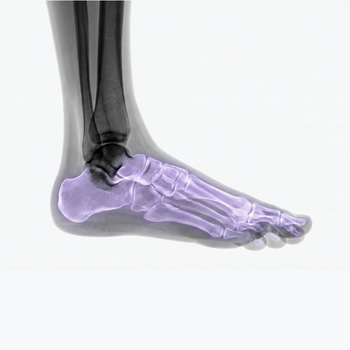
The foot is the lowest part of the leg that is in direct contact with the ground. It consists of 26 bones, over 30 joints, and a network of muscles, ligaments, and tendons. The foot is divided into three parts: the forefoot, the midfoot, and the hindfoot. Its main functions are to support the body's weight, absorb shock, and enable walking and running.

Anatomy and structure

The foot consists of 26 bones: 7 in the hindfoot (including the calcaneus and the talus), 5 metatarsals, and 14 toes. These are held together by ligaments and moved by both intrinsic and extrinsic foot muscles. Strong tendons such as the Achilles tendon ( Achilles tendon ) also play a central role in the foot's ability to move.

Function and biomechanics

The foot acts as a shock absorber and a lever when walking and running. Its arch structure makes it possible to handle body weight and dynamic load. The foot adapts to different surfaces and balances the body.

Movement and load

With each step, the foot undergoes a complex sequence of movements: heel strike, foot roll and push-off. This requires good muscle control, mobility and stability in the entire foot and ankle joint .

Development and age

In children, the arches of the feet are not fully developed and can be perceived as "flat". With age, the arches can sink, which can cause discomfort. Older people are more likely to suffer from wear and tear and poor circulation in their feet.

Common conditions and diseases

The foot is exposed to both acute injuries and overuse. Common problems include heel spurs , plantar fasciitis, hallux valgus, stress fractures and osteoarthritis. Incorrect shoes, being overweight and working a lot on your feet increase the risk of problems.

Examination and diagnosis

Diagnosis is often done through clinical examination, gait analysis and sometimes imaging diagnostics such as X-rays, ultrasound or MRI of the foot . A physiotherapist, orthopedist or podiatrist can make the assessment depending on the nature of the problem.

Relevant symptoms

  • Pain in the heel, arch or forefoot
  • Swelling or stiffness
  • Numbness or tingling
  • Toe or arch deviation
  • Fatigue in the feet after activity

Related conditions and diagnoses

  • Plantar fasciitis
  • Heel spurs
  • Morton's neuroma
  • Hallux valgus
  • Pes planus (flat feet)
  • Arthritis of the ankle or toe joints

Questions and answers

Plantar fasciitis is an inflammation of the connective tissue at the bottom of the foot, often near the heel bone. It causes pain, especially with the first steps in the morning. It is common in runners and people who stand a lot.

No, but they are often related. Plantar fasciitis is an inflammation of the tendon attachment at the bottom of the foot, while a heel spur is a small bony growth on the heel bone. Many people with plantar fasciitis also have a heel spur, but it is not the spur that causes the pain – it is the inflammation of the tendon itself.

Heel spurs are caused by prolonged overuse of the tendon attachments of the heel, often in conjunction with plantar fasciitis. They appear as a small bony growth on the heel bone and can cause pain when walking.

Hallux valgus is a misalignment of the big toe that bends towards the other toes on the foot. It causes a bulge on the inside of the foot and can cause pain and problems with shoes.

Treatment for the pain depends on the cause but may include rest, shoe inserts, physical therapy, anti-inflammatory medications, or, if necessary, surgery. Early diagnosis improves the prognosis.

If the pain does not go away with self-care, gets worse, affects walking, or causes numbness, you should seek medical attention. Sudden swelling or discoloration also requires evaluation.

Flat feet are completely sunken arches, while low arches are a milder form. Both can cause pain or foot problems, especially without supportive shoes.

Supportive shoes with good cushioning, a roomy toe box, and a firm heel counter are best. Orthotic inserts may be needed for some conditions. Avoid flat or tight shoes.

Choose the right shoes, change them regularly, train your feet with balance and strength exercises, and avoid standing for long periods of time. Early treatment of problems reduces the risk of chronic problems.

A certain feeling of fatigue is normal after longer walks, but pain, especially persistent or localized, may indicate overload or improper support that should be investigated further.

Tests related to Foot


MRI Foot

MRI Foot

Magnetic Resonance Imaging
Information

Medical comment included

With us, you will always receive a doctor’s opinion from a licensed physician when you order a medical check-up that includes a medical opinion. The doctor’s opinion includes an overall assessment of your results from laboratory analysis. The opinion is individual and may vary depending on the specific tests your medical check-up includes.

What can I expect in the medical report?

The medical opinion will summarize the results of your test results to give you an assessment of your health including any abnormalities outside the reference ranges. In case of abnormalities or need, your doctor may also contact you for a free conversation to explain and talk about your results. Remember that a health check always includes specific test results based on your health and your personal circumstances. Values outside the reference range should therefore always be discussed with a doctor before any decisions regarding possible treatment are made.

What does the doctor look at during a health check?

When assessing a blood test or health check, your doctor will look at several different parameters to evaluate your health and identify any abnormalities. Below are some common aspects your doctor may examine:

Blood counts: Your doctor will check red, white and platelet counts to identify any signs of anaemia, infection or bleeding.

Nutrients and biochemical markers: Includes, for example, analysis and monitoring of blood sugar (glucose) levels, electrolyte levels (e.g. sodium, potassium), liver function tests (e.g. liver enzymes), kidney function tests (e.g. creatinine, urea) and lipid profile (e.g. cholesterol, triglycerides). The results of the tests give your doctor a better idea of your organ function, blood sugar level, cholesterol conditions and other important health aspects.

Inflammatory markers: Your doctor may measure health markers such as C-reactive protein (CRP) or red blood cell decrease rate (SR) to evaluate inflammatory conditions or confirm an active infection.

Hormone levels: Your doctor may monitor your hormone levels to assess hormonal imbalances or diseases, such as thyroid hormones (TSH, T3, T4), sex hormones or other specific hormones such as testosterone levels.

Specific tests: Depending on your goal of your health check or medical history, your doctor may look into specific tests to investigate conditions or diseases, such as diabetes, vitamin deficiency or autoimmune diseases.

In conclusion, the doctor weighs all test results based on the health check to assess your overall health, detect any abnormalities and identify possible underlying medical conditions.

What happens if I have abnormal test results?

If your blood count is abnormal, this will be addressed in your personal medical opinion. Depending on the nature and extent of the abnormality, your doctor may also contact you directly through the test result service for further guidance. Various measures and advice will be provided based on the specific abnormalities observed along with your medical history.

Call included

Call included, one of our doctors will contact you.
  • MRI foot – advanced magnetic resonance imaging without referral.
  • Recommended for foot pain, instability, swelling or suspected injury.
  • Detailed visualization of tendons, ligaments, joints, cartilage and bones.
  • Quick, painless examination with specialist opinion within a few days.

5 195 kr

Cart

The basket is empty.

Hos oss får du tillgång till Sveriges bredaste utbud av blodprov, hälsokontroller och MR – med läkare som alltid granskar dina provsvar.

Select tests


Sampling fee
Total
Sampling fee?

The sample collection fee is a fixed cost that refers to the visit to the clinic where you submit your sample. The fee is not affected by how many tests you have ordered, but varies depending on the order value:

Free sampling fee

For purchases over 1 000 SEK, the sampling fee is included.