Skip to content

Hand

The hand is an advanced and highly mobile organ that enables grasping, touch, and fine motor skills. It is central to daily activities and social communication.

Quick version

What is the hand?

The hand is the body part at the far end of the arm and consists of bones, joints, muscles, tendons, nerves and skin. It is built for both strength and precision, making it indispensable in daily life.

Anatomy and structure

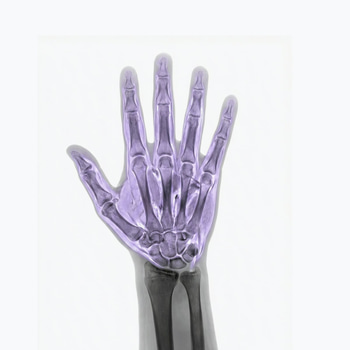
The hand has 27 bones: the carpal bones, metacarpal bones and phalanges. These are held together by ligaments and moved by muscles and tendons. The thumb has a unique position that gives the hand the ability to oppose, i.e. to meet the other fingers.

Functions and movements

The movements of the hand include grasping, grasping reflex, fine motor skills and tactile sensation. The interaction between muscles and joints enables everything from powerful grips to millimetre-precision movements.

Nervous system and sensation

The nerve supply comes from the median, ulnar and radial nerves. These are responsible for sensation and motor function. Damage or pinching can lead to numbness, pain or loss of mobility.

Common conditions and diseases

Having pain in the hand can be due to overload, damage, nerve damage or inflammation. Carpal tunnel syndrome, osteoarthritis, rheumatoid arthritis and trigger finger are some common diagnoses.

Examination and diagnosis

A thorough clinical examination is often supplemented with imaging diagnostics such as X-rays, MRI of the hand or ultrasound. Tests such as Tinel's sign and range of motion tests are used to assess nerve and muscle function.

Relevant symptoms

  • Pain with movement or at rest
  • Numbness or tingling
  • Swelling in the joints of the hand
  • Reduced grip strength
  • Locking in the fingers or wrist

Related conditions and diagnoses

  • Carpal tunnel syndrome
  • Rheumatoid arthritis
  • Trigger finger
  • Dupuytren's contracture
  • Hand fractures

Questions and answers

The hand is made up of carpal bones, metacarpal bones, finger bones, tendons, muscles, ligaments and three major nerves. It is designed for both strength and precision in movement.

Numbness in the hand can be caused by nerve compression, such as carpal tunnel syndrome where the median nerve is affected. Pressure, injury, or circulatory problems can also cause similar symptoms.

Carpal tunnel syndrome is a condition in which the median nerve is pinched in the wrist, causing numbness, tingling, and sometimes pain in the thumb, index, and middle fingers.

Treatment depends on the diagnosis, but may include rest, exercise, medication, orthotics, or surgery. In cases of nerve involvement, early treatment is important to avoid permanent damage.

Hand pain due to MSDs and injuries can often be reduced with rehabilitative exercises. Physiotherapy can strengthen muscles and increase mobility, but should always be tailored to the cause and diagnosis.

Osteoarthritis of the hand is characterized by stiffness, pain, and swelling, especially in the thumb or finger joints. X-rays often confirm the diagnosis, and early treatment can relieve symptoms.

Sprains, fractures, tendon ruptures and wounds are common hand injuries. These can occur during falls, sports or work and often require careful diagnosis and rehabilitation.

Yes, both tendonitis and arthritis are common in the hand, often due to overuse. Symptoms include pain, swelling, and a feeling of warmth. Treatment includes rest and anti-inflammatory medication.

It is a condition where a tendon gets caught during movement, causing a finger to lock in a bent position. Trigger finger is caused by irritation of the tendon sheath and may require treatment with injections or surgery.

Tests related to Hand


MRI Hand

MRI Hand

Magnetic resonance imaging
Information

Medical comment included

With us, you will always receive a doctor’s opinion from a licensed physician when you order a medical check-up that includes a medical opinion. The doctor’s opinion includes an overall assessment of your results from laboratory analysis. The opinion is individual and may vary depending on the specific tests your medical check-up includes.

What can I expect in the medical report?

The medical opinion will summarize the results of your test results to give you an assessment of your health including any abnormalities outside the reference ranges. In case of abnormalities or need, your doctor may also contact you for a free conversation to explain and talk about your results. Remember that a health check always includes specific test results based on your health and your personal circumstances. Values outside the reference range should therefore always be discussed with a doctor before any decisions regarding possible treatment are made.

What does the doctor look at during a health check?

When assessing a blood test or health check, your doctor will look at several different parameters to evaluate your health and identify any abnormalities. Below are some common aspects your doctor may examine:

Blood counts: Your doctor will check red, white and platelet counts to identify any signs of anaemia, infection or bleeding.

Nutrients and biochemical markers: Includes, for example, analysis and monitoring of blood sugar (glucose) levels, electrolyte levels (e.g. sodium, potassium), liver function tests (e.g. liver enzymes), kidney function tests (e.g. creatinine, urea) and lipid profile (e.g. cholesterol, triglycerides). The results of the tests give your doctor a better idea of your organ function, blood sugar level, cholesterol conditions and other important health aspects.

Inflammatory markers: Your doctor may measure health markers such as C-reactive protein (CRP) or red blood cell decrease rate (SR) to evaluate inflammatory conditions or confirm an active infection.

Hormone levels: Your doctor may monitor your hormone levels to assess hormonal imbalances or diseases, such as thyroid hormones (TSH, T3, T4), sex hormones or other specific hormones such as testosterone levels.

Specific tests: Depending on your goal of your health check or medical history, your doctor may look into specific tests to investigate conditions or diseases, such as diabetes, vitamin deficiency or autoimmune diseases.

In conclusion, the doctor weighs all test results based on the health check to assess your overall health, detect any abnormalities and identify possible underlying medical conditions.

What happens if I have abnormal test results?

If your blood count is abnormal, this will be addressed in your personal medical opinion. Depending on the nature and extent of the abnormality, your doctor may also contact you directly through the test result service for further guidance. Various measures and advice will be provided based on the specific abnormalities observed along with your medical history.

Call included

Call included, one of our doctors will contact you.
  • MRI scan of the hand
  • Recommended for unexplained pain, swelling, or suspected tumor
  • Accurately detects tendon injuries, fractures, inflammation, and cysts
  • Painless and radiation-free examination – fast appointment and results

4 195 kr

Cart

The basket is empty.

Hos oss får du tillgång till Sveriges bredaste utbud av blodprov, hälsokontroller och MR – med läkare som alltid granskar dina provsvar.

Select tests


Sampling fee
Total
Sampling fee?

The sample collection fee is a fixed cost that refers to the visit to the clinic where you submit your sample. The fee is not affected by how many tests you have ordered, but varies depending on the order value:

Free sampling fee

For purchases over 1 000 SEK, the sampling fee is included.